
-


打开微信扫一扫

本院成果展示
Li Zongrong: A Letter to Founding Presidents of IS4SI and Presidents of 2023 Beijing Summit
A Letter to
Founding Presidents of IS4SI and Presidents of 2023 Beijing Summit
Li Zongrong
Huaguang Academy of Information Science at Wuhan, Wuhan, China
To Founding Presidents of IS4SI and Presidents of 2023 Beijing Summit
Dear Professor K. Ouyang, W. Hofkirchner, and P. Marijuan,
and Dear Professor Y. Zhong and Z. Shi:
The IS4SI 2015 Summit was held in Vienna, Austria. At that time, I attended a master's degree program in developmental and educational psychology at Wuhan University, entered a Chinese Army psychology program, and signed a "confidentiality agreement" with the military. According to the agreement, I cannot go abroad to attend academic conferences during the project. In this way, I missed the IS4SI 2015 Summit.
After 2015, I encountered "copyright" infringement. The research findings of my doctoral thesis and post-doctoral research work report, "Theoretical Informatics," were published under the name of "Li Zongrong," which was embezzled by other people. I have adhered to the principle of "safeguarding rights in accordance with the law" for eight years and defending my achievements, so I cannot afford to attend the biennial international academic summit of IS4SI.
On February 25, 2023, a doctor surnamed Zhang from the Philosophy Department of Huazhong University of Science and Technology forwarded to Li Zongrong a material on the "Social Epistemology" on the WeChat official account, entitled "Call for Papers, The 2023 International Summit on the Study of Information, Forum on the Information Society" signing off with “Forum on the Information Society, Social Epistemology, 2023-02-25 15:59, Published in Beijing”. It's a Chinese translation of relevant parts on the website “https://is4si.org/is4si-summit-2023/”. To Li Zongrong's surprise, there was a picture composed of 16 people's avatars at the end of the "Call for Papers", imprinted with the stamp of "Social Epistemology" in the lower right corner, as shown in the following figure.
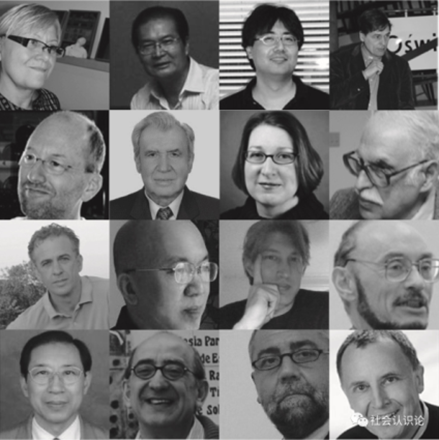
Li Zongrong saw that the bottom row, the first on the left, was my photo. This has aroused the memory of Li Zongrong, who, as the "Secretary General" of the conference, initiated and participated in the organization of the Beijing 2010 International Conference on Information Science, and participated in the establishment of the International Society for Information Science.
Read carefully the "The Call for Papers" of IS4SI 2023 Beijing Summit, Li Zongrong observed: “Having noticed the fact that there have been greatly different demands in scientific view and methodology, which as an entirety is termed ‘paradigm’, respectively from the study of information discipline and from the physical discipline, ‘Paradigm Change in the Information Discipline’, has been selected as the theme of the ISSI’2023 Summit by the sponsor and organizer. A lecture explaining the theme will be scheduled at the opening session of the Summit”. Li Zongrong was greatly interested in this lecture.
Li Zongrong requested the office of "Huaguang Academy of Information Science at Wuhan" (referred to as "Huaguang Academy") to edit and push the 103rd issue of "Today's Highlights", and forward the "Call for Papers" issued by the IS4SI and the "Call for Papers" issued by the Forum on Information Society (see the website of Huaguang Academy: http://www.hgacademy.cn/index.php/View/358.html & http://www.hgacademy.cn/index.php /View/359.html)。 Li Zongrong organized more than a dozen scholars to study and discuss, co-wrote 8 articles, and submitted to the summit; at the same time, a "Collected Works" will be printed for the Beijing Summit. Here is an open letter from Li Zongrong to the sponsors and organizers of the Beijing Summit and serves as the "preface" to the collection.
1. Report on the Research Experience and Main Achievements in the Past Eight Years
During the eight years from 2015 to 2023, Li Zongrong, on the one hand, with great anger, exposed and accused the bold and reckless actions of the infringers. He even copied 320000 words from Li Zongrong's works, constituting his own work "Theoretical Informatics"; On the other hand, Li Zongrong continued his work at the University of Missouri in 1994, striving to create and develop "theoretical information science", providing an "explanation" for Plato's "theory of ideas" in the information age.
Li Zongrong saw that the dispute over "status" and "relationship" between "material" and "information" can be traced back to the controversy between Aristotle and Plato on the separation theory of "particulars" and "universals", which can lay the foundation for the commitment of philosophical ontology in theoretical informatics. Interpreting social information as the particulars and universals under the illumination of the idea of "good", natural information is the particulars and universals under the illumination of the "sun", which respectively lead to the emergence of social science and natural science. Aristotle's criticism of the separation theory can be found in his "Physics" and "Meta-Physics"; Plato's insistence on separation is reflected in the Republic and the Law. They teach and apprentice at different levels of reasoning. Now, we need to carry forward the zeitgeist of "Informationism" and achieve the transformation from the paradigm of physics to that of informatics. Obviously, we need to criticize Aristotle's limitations of physicalism prescribed by his “Physics” and "metaphysics".
The titles and signatures of eight articles written by more than a dozen of us are as follows.
Paper 1: Contribution to the Forum on Information Society. Title: Comparison and Analysis of the Characteristics of Natural Information and Social Information; Signed by Li Zongrong, Zhang Yiqiong, and Tian Aijing.
Paper 2: Contribution to the Forum on Information Society. Title: On the Two Abstractions of Social Information and Plato's Separation Theory of Particulars and Universals; Signed by: Yan Wei, Wang Xia, and Li Zongrong.
Paper 3: Contribution to the Forum on Information Philosophy. Topic: On the Onesidedness of Physicism and the Universality of Informationism; Signed by: Chen Mingyi, and Li Zongrong.
Paper 4: Contribution to the Forum on Information Philosophy. Topic: Looking at "Discipline Informatization" in the Information Age from the Growth of Natural Science; Signed by: Chen Lamei, Xia Lin, and Li Zongrong.
Paper 5: Contribution to the Forum on Information Philosophy. Topic: Information Phenomenology: An Information Interpretation of Husserl's Phenomenology; Signed by: Wang Xia, Chen Lamei, and Li Zongrong.
Paper 6: Contribution to the Forum on Information Science. Topic: On Informatics Approaches to Overcoming Natural Science Crises; Signed by: Cao Zhilan, Li Zhongyan, and Li Zongrong.
Paper 7: Contribution to the Forum on Information Science. Title: Two information science revolutions have promoted the leap of scientific outlook and methodology; Signed by: Xia Lin, Zhong Qikai, Zhang Zhiqin, and Li Zongrong.
Paper 8: Contribution to the Forum on Information Science. Topic: The Physical Paradigm of Communication Engineering and the Information Paradigm of Dissemination Science; Signature: Tian Aijing, Zhou Caihong, Guo Kexiang, and Li Zongrong.
2. "Shannon's "Information Theory" is Actually "Message theory", and Shannon's "information formula" is Actually "Message Formula".
After re-studying Shannon's theory, Li Zongrong chose to listen to a course involving Shannon's "Mathematical Theory of Communication" for undergraduate students, and held discussions with the teachers. Shannon's research did use mathematical methods such as probability statistics and calculus to quantitatively describe the physical laws of the transmission process of "electrical signals" through "channels". This fully conforms to the paradigm of natural science and is considered to be the only scientific discipline in the entire information disciplines that utilizes physical-mathematical methods.
However, the object Shannon quantitatively describes using mathematical methods is not "information", but "message". Shannon did not give a precise definition of "information", and he believed that "information is a kind of message". Message, as the "carrier" of information, whether it is a "signal" or a "symbol", occurs in the "space-time" of physics and can be quantified. "Messages", of course, can be "measured" and must be "measured". Otherwise, how do cable companies calculate the "number of messages" sent by customers and how do telephone companies charge? However, information is "content" or "meaning" of the "message" as carrier; It occurs in the "space-time" of psychology and culture, and therefore has no weight and does not occupy space; It can be "time agnostic" or even "spatiotemporal inversion", and cannot be measured spatiotemporally. Information has an evolutionary process, but the process is not a function of "time"; Information cannot be described by any quantitative mathematical model and "formula". In this sense, the so-called Shannon's "information theory" is actually "message theory".
The so-called Shannon formula for "information" measurement is actually a formula for "message" measurement. This has been seriously pointed out by experts of Shannon's contemporaries, and Shannon has not refuted it. Therefore, Shannon never claimed that he has proposed "information theory" and created a general theory of information; He merely said that he has established a "mathematical theory" of "communication". Shannon is well aware if his mathematical theory of message measurement, coding, and channels was applied to the Humanities and social sciences, some difficulties will be encountered. He clearly warns scholars to pay attention.
However, Shannon's "reminder" had little effect. The mistakes of mistaking Shannon's "message theory" for "information theory" and using Shannon's "information formula" as a basic tool for studying information have been widely circulated. In order to realize the transformation from physical-mathematical methods to logical -programming methods, it is necessary to return Shannon's "message theory" and "message formula" to their true colors.
3. "Symmetry Breaking" in Wiener's "Material, Energy, and Information" Trilogy
Philosophical thinking about information began with Wiener. He said, "Information is information, not matter, nor energy". Since then, the "ternary theory" of the constituent elements of the universe has spread.
Logically, the direct "corollary" of Wiener's theory of the "three elements" of the universe is that the "energy" of physics can not only explain the laws of motion of "material", but also explain the evolutionary laws of "information" and "non -conservation phenomenon". However, in practice, using the concepts and principles of physics can only explain the "material characteristics" of communication, control, computing, and robotics, but cannot explain the "information characteristics" of nature (such as biological genetic information DNA) and human society. This "Wiener's inference" error stems from the inherent shortcomings of Wiener's "three element theory": (1) the wrong positioning of the concept of "information"; (2) The lack of the concept of "power" in information evolution.
Wiener did not fully affirm the status and role of information, and he ignored the existence of "non-physical energy". From the perspective of the "material-information duality", the "quaternism" of the constituent elements of the universe (material, energy, information, and intelligence) is reasonable. There is a "symmetry breaking" in Wiener's "trinity", which is one-sided. The rapid progress of ChatGPT has alerted common people to correct the lack of Wiener's trinity. There is a video titled “Artificial Intelligence Was Urgently Stopped, and The Reason Is Chilling”, which has been disseminated online. In order to change the paradigm of information discipline, scientists and philosophers need to acknowledge the important position of "intelligence".
4. Unveil the One-sidedness of Worldview and Methodology of the "Physicalism"
Physics is the foundation of all natural sciences. It summarizes and abstracts the existing characteristics, laws, and mechanisms of motion of all material objects "on the ground" and "in the sky" through quantitative and formulaic methods. It is reasonable and correct. The maturity of physics and its popularization and application in material disciplines such as chemistry and biology have led to the development and glory of natural science, technology, engineering, products, and industries, making an indelible and great contribution to the progress of human civilization. However, the practical utility and scope of application of the concepts, principles, and methods of physics have been unilaterally exaggerated by some philosophers, and have been sublimated into the philosophy of physicalism. Physicalism assumes that the physical sciences can encompass everything in the world, and that ultimately everything in the world can be explained through physics. In other words, the thesis of physicalism maintains that the physical language is a universal language of science ---- that is to say, that every language of any sub-domain of science can be equipollently translated into the physical language.
(1) Based on common sense and convention in the information age, physicalism can be refuted. We personally travel to the United States by plane for over 10 hours. Our paper participates in online academic exchanges in the United States, and the personal submission and acceptance of the papers by the organizer occur between mouse clicks. A person refers to 100 papers and 50 works, and the completed doctoral thesis is granted "copyright", while the original authors of those papers and works continue to enjoy copyright. The paper is produced in a "no-consumption" manner. More importantly, in the world of papers and books, there has been "information explosion growth"; there is no “conservation law” like in the material world. The proponents of the "conservation law" in physics cannot explain the "non-conservation phenomenon" in information science.
(2) In the sense of logic, physicalism is untenable. Plato's worldview of "idealism" is superior to physicalism: the material being (i.e. A) and immaterial being (i.e. non-A); they are the “one divides into two” of the world, and they are also “merged into one”. Only then can "dialectics" promote world development. If there is only “material being” and no “immaterial being”, then “one divides into one”, there is no branch, no dialectics. Aristotle criticized Plato's idealism, wrote "Categories" and "Meta-Physics", pioneered physics and physicalist ideas, and ruled society and academia for thousands of years. Its grades are primary, but it's time to correct its mistakes!
(3) Criticize physicalism using the paradigm of information science. Pushing down Aristotle's critique of idealism is a necessary condition for us to achieve the transformation of the paradigm of information science. Plato believed that the "world of ideas" could exist independently (separately), and Aristotle criticized this "separation theory". We see that, like the classics of natural scientists, Plato's "Republic" and John Rawls' "A Theory of Justice" put aside the abstraction of "particulars" and devoted themselves to studying the theory of "universals". The “universal” theories of human beings about the state, the rule of law, and justice not only exist in a separate way from the "particulars", but also evolve in a separate way.
5. In Today's Information Society, the Existence of "Immateriality" can no Longer be Negated.
Regarding all possible “existence” in the world, Aristotle established 10 categories. Among them, each category is fundamental, irreparable, and irreducible to each other. As shown in Table 1 below.
Table 1 "Ten Categories" Discussed in Aristotle's Theory of Categories
Number | Category | Example |
1 | Physical entity (material) | Man, Horse |
2 | Quantity (size, weight) | Two feet long |
3 | Nature (feature) | White, Grammatical |
4 | Relationship (quantity) | Twice, Half |
5 | Location (geography) | in Lucion, in the market |
6 | Time | Yesterday, a year ago |
7 | posture | Lying, Sitting |
8 | Status | Wearing shoes and armor |
9 | Acting on | Cutting and burning |
10 | Be acted upon | Be cut and burned |
Aristotle is a “categorical realist”. In Aristotle's works, the most discussed categories are: entity, quantity, and property; He sometimes uses the phrase other designated categories”to pass over other categories. Aristotle particularly discusses the priority status of “entities”.
“Information” does not have the "ten categories" of "material" objects, but has its own "twelve attributes", as shown in Table 2. The first to sixth attributes of an information object are exactly opposite to those of a material object; the seventh to twelfth attributes of information object are not present in physical objects. So, information is not material, it is an "immaterial being"; The characteristics, properties, and evolution laws of information cannot be explained and described by the concepts, principles, and methods of physics. It requires the science of information phenomena themselves (i.e. the concepts, principles, and methods of information science) to explain them. The monism of philosophical ontology has come to an end.
Table 2 Twelve "Attributes" of "Information"
Number | Attribute | Example |
1 | Information entity: meaning, idea, thought | point, line, area, right, obligation, good |
2 | Number of carriers: increasing with the time, and the non-conservative | dictionary is getting thicker and thicker from scratch |
3 | Information features: not "formulaic", but "procedural". | the sequence, selection, and cycle in the program |
4 | Information relationship: no quantitative, but "logical" relationship | points forming a line; Concept, principle, and method |
5 | Information space: information entities almost occupy no space | in the brain, books, and the Internet |
6 | Information time: information is eternal, not in time | Euclidean geometry will always exist |
7 | Original production: disposable innovation, production | Karl Marx's production of Capital is disposable |
8 | Reproduction: almost no cost and no energy consumption, | electronic document copy, paper document copy |
9 | Information storage: Almost no space and geographical location | USB flash disk, optical disk, cloud disk, etc., massive storage |
10 | Information transmission: via the Internet, does not require logistics network | Internet and smart phones, instantaneous transmission |
11 | Information sharing: simultaneity, not heterochrony | a copy of Capital for global use |
12 | Information evolution: using logic and program to depict its trajectory | history of philosophy, science, discipline, etc. |
Below, briefly explain these twelve attributes of information. The first to sixth attributes of an information object are exactly the opposite compared to material objects.
(1) Information entity. Meaning, thought, idea, etc. are "reality" and "entity"; although “information” cannot be located in physical space-time.
(2) Number of carriers. Information is the "meaning, thought, and idea" of a carrier; It cannot measure physical time, space, and weight on its own, but the "carrier" of information can be measured. Information increases with time and is not conserved.
(3) Information characteristics. Information does not have physical, chemical, or biological characteristics and cannot be quantified or formulated; however, information can be logicalization and programmatization.
(4) Information relationships. Information has no quantitative relationship or comparative relationship of size, but there is a logical relationship between information.
(5) Information space. Compared to physical entities, information entities hardly occupy space.
(6) Information time. The material objects are constantly changing, and there must be birth and death. Information is not, once it is generated, it can never be extinguished.
The seventh to twelfth attributes of information are not present in physical objects.
(7) Original production. The "innovation" and "production" of information products are one-time.
(8) Copy production. The replication of information products is almost cost free.
(9) Information storage. Information storage requires almost no space or geographical location.
(10) Information transmission. Information does not need to pass through the logistics network, but it can be instantly disseminated on the Internet.
(11) Information sharing. Information sharing is simultaneous; material products cannot be shared simultaneously.
(12) Information evolution. The evolution of information can be characterized by logic and program; the "history" of evolution can be preserved, such as the history of human civilization, history philosophy, history of science, history of discipline, and the "history of ideas" of an expert.
6. Human Genome Project: Physics cannot "Thoroughly Explain" Natural Phenomena.
The scientific purpose of the Human Genome Project and the specific goal of "timing, quantification, and quality determination" are to admeasure the sequence of 3 billion nucleotides that make up the human genome, so as to clarify the structure and function of the human genome and all genes, to interpret all human genetic information, to uncover the mysteries of the human body, and to explain the laws of life, aging, disease, and death of people. The success of the Human Genome Project depends on bioinformatics. Once a sequence is read out, its quality control, assembly, submission, analysis, and even the understanding and interpretation of its meaning depend entirely on bioinformatics. It's difficult to use physics here.
The Human Genome Project is remarkable because of people's demand for health. At present, gene diagnosis technologies for many diseases have been established, and gene prediction, gene prevention, gene diagnosis, and gene therapy will revolutionize the entire medical landscape. The differences in DNA sequences will help humans understand the resistance of different individuals to diseases, and therefore can be tailored according to each individual's "genetic characteristics". The medicine of the 21st century will be "personalized medicine". At that time, DNA sequence analysis could become the fastest, most accurate, and cheapest diagnostic method.
We believe that the Human Genome Project only makes a list of "information carriers" for genetic material (DNA), but the carrier information and its interaction mechanism are not clear. A natural scientist who does not understand informatics is like a person who has not studied "programming" and reads computer programs. So far, we have reason to believe that, without the intervention and cooperation of "bioinformatics" as a member of information science, only the sequencing of human genome can only explain the carrier of DNA, not the working process and mechanism of DNA. In this sense, claiming that physics can "completely explain everything in the world" is just exaggeration. In this way, people doubt the ability of the entire natural science to "completely explain" natural phenomena and its thorough "scientific nature". And the physicists actually accuse the informatics that cannot be located in time and space as "pseudoscience"!
7. The illumination of "Good" Different from the Sun: the "Particulars" and "Universals" in Social Phenomena
Physicists also study "information" about "particulars" and "universals", but they only apply the concepts and principles of physics to deal with "material objects" that are visible to the naked eye, without applying the concepts and principles of information science to deal with "information objects" that are visible to the mind. For example, some experts advocate in economics and political science that "quantitative methods" are authentic scientific methods. However, we know that the purpose of quantification is to use mathematical models and formulas only to describe the operational laws of material objects. May we ask, "quantitative economist", can you calculate the economic crisis in 2008 or a certain year after? Can "quantitative political scientist" use mathematical formula to calculate when the Russia-Ukraine conflict ends? The “misleading” of physicalism in the Humanities and social sciences can no longer continue!
Plato uses metaphors such as "solar metaphor" and "line metaphor" to express his idealism. In Figure 1 below, the meaning of "solar metaphor" is: "light" is the intermediary connecting human vision and visible objects; without light, we can't see anything. With light, we can see the “real object” and its “shadow”; Of course, we can also see the natural attributes of human behavior, namely our “body movements”, such as “killing” and “being killed”, and then explain them in terms of physics, chemistry, and biology. If there are only natural sciences in our society to explain "killing", without Humanities and social sciences to explain "killing", i.e. without the distinction between "good and evil", human society would have become an "animal world".
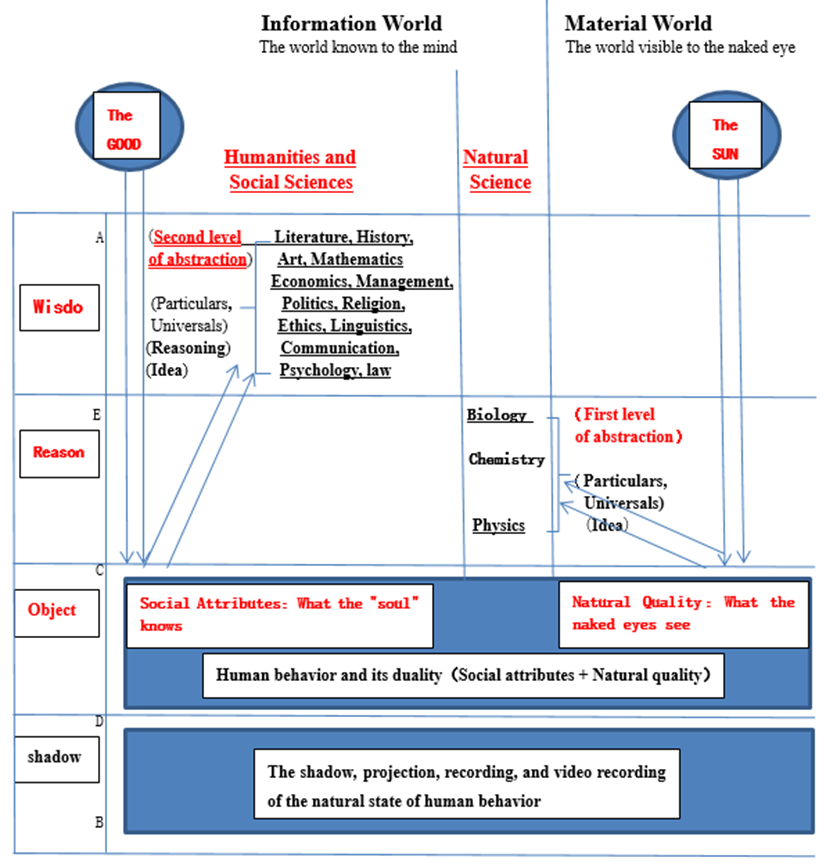
Figure 1 Plato's "Solar Metaphor" and "Line Metaphor":
The "Particulars" and "Universals" of Human Behavior
In other words, the "first level abstraction" in Figure 1 is the abstraction of the "natural attributes" of human behavior, that is, the "physical object", which is the abstraction of the physical, chemical, and biological "meanings" of the physical object, or the abstraction of physicalism. The "second level of abstraction" is the abstraction of the "social attributes" of human behavior, that is, the "meaning" of Humanities and social sciences, and the abstraction of "abstraction", also known as the abstraction of informationism. For example, in human society, there are various special freedoms and equality, as well as general freedoms and equality. The second level of abstraction is the re-abstraction of "abstract concepts" created by humans that are not already present in nature, that is, the abstraction of Humanities and social sciences.
The first level of abstraction, namely is the abstraction of physics, chemistry, and biology; Because of its absolute "value neutrality" in reality, it can be universally accepted by all humanity. The second level of abstraction is inevitably “value related”. For example, the concept of “goodness” is an abstraction of ethical and moral behavior that benefits others and society in human social behavior. Usually, in different societies, different groups of people may have vastly different values, so there are both commonalities and personalities in the secondary abstraction.
8. Natural World and Artificial world: Natural Science + Social Sciences
Before the maturity of information science, the relationship between natural science and Humanities and social sciences is shown in Figure 2. According to Aristotle's view, the world can be divided into two parts: the world composed of naturally generated things, known as the "natural world", and the world composed of human made things, known as the "cultural world". The consensus in the academic community is to collectively refer to all human creations as "culture", including "material culture" and "immaterial culture". Immaterial culture can also be divided into behavioral culture, institutional culture that is relatively detached from human specific behavior, and spiritual culture. We believe that the research object of the so-called Humanities and social sciences, since it is not the "natural world", can only be the "cultural world".
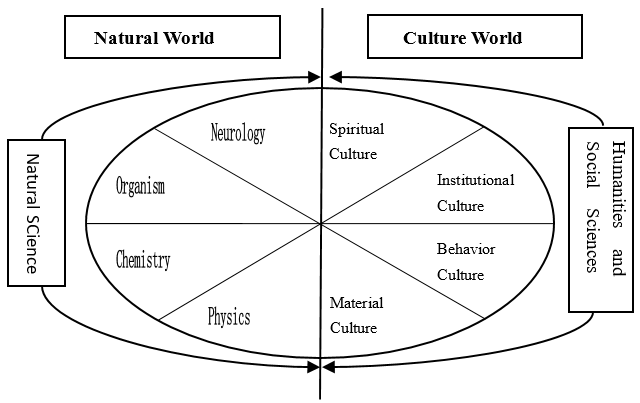
Figure 2 The Relationship between Natural Science and Humanities and Social Sciences
In the early and middle stages of the development of information science, there was no self-awareness to grow into a "science", and there was no need to establish the "science-view", "world-view", and "outlook on life" of information science itself. At that time, the impact of "information science" as information technology and tools, in the field of Humanities and social sciences, was only to enhance their information processing capabilities and efficiency. The researchers of Humanities and social sciences still follow the science-view (and paradigm theory), world-view (and methodology), and outlook on life (and axiology) of natural science, and they have no choice.
The "material culture" in the research of Humanities and social sciences refers to the material products created by humans, including production tools and labor objects, as well as the technology used to create material products. In the Humanities and social sciences, the main focus of studying "behavioral culture" is art. Behavioral culture emphasizes skills, experiences, and procedures centered by human behaviors. The typical discipline for studying "institutional culture" is law. Institutional culture includes laws, code, regulations, rules, customs, etc. Spiritual culture can be divided into religion, philosophy, and science. Human beings have adopted different research methods for "truth", "world", and "life", forming a distinction between religion, philosophy, and science. Generally speaking, the method of religion is "faith", the method of philosophy is "logic", and the method of science is "empirical".
9. The "Discipline Informatization" of Natural Sciences and the "Disciplinary Informatization" of Humanities and Social Sciences
From the perspective of the history of science, after two physical revolutions, a world-view of material science was established; similarly, after two information science revolutions, a worldview of information science has been established. In the history of human thought, the study of information is as ancient as the study of material objects; as for whether to use the term 'information', it is not the key issue. We have recalled that before the physics theory of Aristotle in ancient Greece, Plato had already completed the first relatively whole information theory in the history of human thought, namely the theory of ideas, also known as the Idealism.
In the 1940s,information theory transformed Plato's concept of information into an information tool, completing the first information science revolution. Half a century later, the International Conference on Fundamentals of Information Science was held one after another, which gave birth to the theoretical informatics; As a result, the ubiquitous information tools in the information society have sublimated into new information concepts, forming the second information science revolution. From then on, with the establishment and development of "theoretical informatics", a mature knowledge system of information science was presented to us, and the science-view, world-view, and outlook on life of information science were established. The information science knowledge system with "1+4+3" structure (i.e. theoretical informatics + computer, communication, control, and robotics + natural, social, and humanistic informatics) (See Figure 3)is the third complete information theory. It negates Shannon's worldview and methodology of information theory. It advocates the "supreme program" of science in the 21st century: the "integration" of information science and natural science can simultaneously explain nature, society, and human thinking.
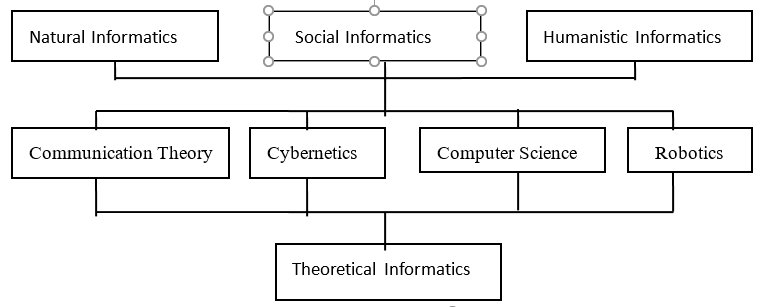
Figure 3 The 1+4+3 Structure of Disciplinary System of “Today’s Information Science”
Physicism rejects the "material-information duality", only acknowledges the "material characteristics" of beings, negates their "information characteristics", and attempts to replace information itself with the "material carrier" of information; For example, Shannon uses "message" to replace "information". We advocate the "revolution" of informatics and “informatization” with the purpose of returning to the true nature of facts, recognizing both the "material characteristics" of things and their "information characteristics", and returning information to its "immaterial" form,that is to achieve "discipline informatization". Therefore, the "discipline informatization" of natural science will not cancel the research results of natural science on the "material characteristics" of nature, but rather supplement the research results of "information characteristics" to it. For example, in the Human Genome Project, "bioinformatics" supplements the original traditional "biology", rather than denying it, and will not cancel it. The "discipline informatization" of humanities and social sciences, due to the "path dependence" of the previous "disciplinary materialization" and the "physicalist" thinking habits, truly reveals the "information characteristics" of the research object, abandons the "quantitative formulaic" method, and uses the "logical procedural" method to accumulate new discourse systems, academic systems, and disciplinary systems, which is very difficult. It may take several generations of effort to complete.
The "basic information science" developed from the telephone, telegraph, control, and computer, accompanied by the "tools" of information technology, means, and product forms, has entered thousands of households, entered natural sciences, Humanities and social sciences, and improved the ability and efficiency of information processing there. When information science has matured, a science-view, world-view, and outlook on life were established that were different from natural sciences. Then, it was applied as a "tool" in the form of concepts, methods, and theories to study the disciplines of natural, social, and Humanistic information phenomena. Information science is applied to the study of information phenomena in nature, resulting in physical informatics, chemical informatics, bioinformatics, and neuro-informatics. The application of information science to the study of human phenomena has led to the emergence of literary informatics, historical informatics, and philosophical informatics. The application of information science to the study of social phenomena has led to the emergence of social informatics, economic informatics, political informatics, legal informatics, ethical informatics, news informatics, and so on. In this way, a broad sense of information science has been formed, which is “Tomorrow’s Information Science.
After the "discipline informatization" movement of natural sciences, Humanities and social sciences, "today's information science" will develop into "tomorrow's information science". We believe that the foundation and core of today's information science are information devices (computer, communication, control, robots) that belong to the category of "material culture"; The foundation and core of “tomorrow's information science” is the worldview and methodology of theoretical information science and information philosophy, which belong to the category of "spiritual culture". The "discipline informatization" of natural sciences and Humanities and social sciences, as well as the “tomorrow’s information science” emerged thereafter, are shown in Figure 4. Overall, the research fields of information science are more extensive than that of natural science.
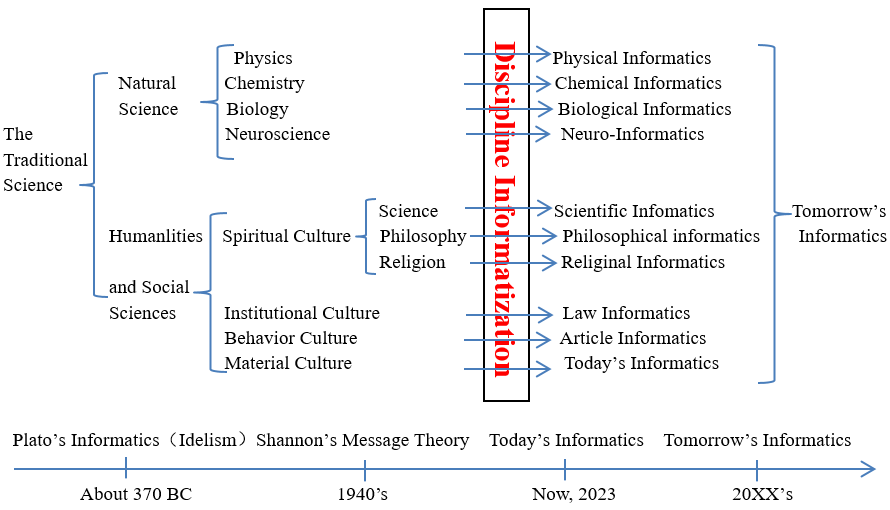
Figure 4 Discipline Informatization, and Tomorrow’s Information Science
In Figure 4, “material culture” includes all artificial products with “material” forms, including information devices such as “computers” and “smartphones”. Although they are both tools used to process information, Windows and Android are only a part of them; If the entire material equipment is damaged, the software systems within it will be destroyed. So, in a strict sense, the research object of "today's information science" is the hardware and software related to computers, communication, control, and robots in material culture; the expression form of its research results (concepts and theoretical systems) belongs to the "science" part of "spiritual culture", discussing the worldview and methodology of information science.
We believe that the composition of the natural world is the material and natural information, while the composition of the artificial world includes material and "cultural" information. Human beings have created language symbols (words) and used words to record the "history" of material and spiritual products in the artificial world. The design drawings of a large airplane can be printed out and filled with a truck. Tomorrow's Informatics "refers to the information science that has achieved "disciplinary informatization". It is combined with traditional natural science disciplines on material objects and can explain all information phenomena of nature, society, and thinking. For example, bioinformatics collaborates with biology, neuro-informatics collaborates with neuroscience, and explains natural information phenomena; Computer science and artificial intelligence science can collaborate with related disciplines such as physics, chemistry, and biology to explain social and cultural information phenomena.
10. Basic Ways and Means to Achieve the Transformation of Scientific Paradigms
Engels once said, "If a nation wants to stand at the pinnacle of science, it cannot be without theoretical thinking for a moment. Xi Jinping pointed out that this is an era that requires theory and is bound to produce it. It is an era that requires thought and is bound to produce it. We cannot disappoint this era. Faced with the new situation and requirements, there are still some urgent problems to be solved in the field of philosophy and social sciences in China. For example, the development strategy of philosophy and social sciences is not yet very clear, the overall level of discipline system, academic system, and discourse system construction is not high, and the academic originality ability is not strong.
We believe that the current is a time when there is a special need for "theoretical thinking" in information science and information philosophy. The theme of this Beijing Summit, "Paradigm Change in Information Discipline," can have two meanings. On the first level, the disciplinary paradigm of Shannon's "physicalist" worldview and methodology have been transformed into the disciplinary paradigm of "informationalism" worldview and methodology; In the second layer, the information philosophy view of "material, energy, and information" was transformed from Wiener's "ternary theory" of information philosophy to the "quaternary theory" of "material, energy, information, and intelligence" of information philosophy.
To achieve the transformation of disciplinary paradigms, it is first necessary to develop theoretical thinking in information science and information philosophy, solve our cognitive problems, and rationalize our ideological concepts regarding the transformation of information disciplinary paradigms. The 8 articles we submitted to this summit are a systematic review and summary of our research achievements over the past 8 years. Their “themes” are:
The first paper is to shake the monism of philosophical ontology; Use the information "12 attributes" to prove the existence of an "immaterial entity".
The second paper is to improve the epistemology of philosophy; discussing natural information is one abstraction, and understanding "social information" is two abstractions.
The third paper, overthrowing physicalism, promoting informationism, and changing Wiener's trichotomy (material, energy, and information)to quaternism: "material, energy; information, and intelligence".
The fourth paper is about the transformation of the spirit of the times: from deities to materials, and the discipline materialization; now we need discipline informatization.
The 5th paper, phenomenology intentionality is the source of life impulse, consciousness, and creation, and the "paradigm shift of discipline" is the vitality of life.
The 6th paper: Revise the phrase "science = natural science" in the industrial era to "science = natural science + information science" in the information era.
The 7th paper: Two information science revolutions promoted theological psychology in Middle ages, physical psychology in industrial age, and information psychology.
The 8th paper, Shannon's "information theory" is actually "message theory", and Shannon's "information calculation formula" is actually "message calculation formula".
We believe that after solving the cognitive problem it is necessary to implement the "discipline informatization" movement in the spirit of the "Informatism" era. In that way, the worldview and methodology of informatization permeate into various disciplines of natural sciences and Humanities and social sciences, forming new discourse systems, academic systems of concepts, principles, and methods, as well as disciplinary systems. The new scientific landscape is shown in Figure 3.
Between 2015 and 2022, we completely did not participate in the exchange and discussion of the IS4SI biennial academic "summit", and we greatly lagged behind international academic peers. The understanding reported above is likely to have been discussed or resolved by many scholars; or our viewpoint and understanding may lack sufficient facts, sufficient reasons, and rigorous arguments. Welcome the organizers and organizers of the 2023 Summit, as well as the attending professors and scholars, to raise questions, refute, criticize, and provide suggestions.
Thank you very much to the organizers and organizers of the IS4SI 2023 Beijing Summit. Thank you for giving us an opportunity to organize our research results, report to you, and learn from you and other scholars!
(By Li Zongrong; April 6, 2023; in Wuhan, China.)
[Return to the first page] [Return to our institute for achievement display]