
-


打开微信扫一扫

本院成果展示
Li Zongrong: Finding a General Way to Solve Mind-Body Problem ------ On Plato’s Idealism, and Dualist Informatism, Information Philosophy, and Information science
Finding a General Way to Solve Mind-Body Problem
------ On Plato’s Idealism, and Dualist Informatism, Information Philosophy, and Information science
Zongrong Li
Institute of Philosophy, Huaguang Academy of Information Science at Wuhan, China
Abstract: Based on theoretical informatics, this paper first designs a thought experiment to describe Plato's theory of Ideas, and explains that cultural knowledge about "universals" can be separated from the "particulars" of human cognition. If an alien destroys all Earthlings but retains their intellectual achievements and related material products, and draws on Earth's culture, they can develop a trump card of the cosmic spirit. So, Plato said that ever-changing (impermanent) matter is “real”; The "ideas" expressed in human language is not only "real" but also "eternal"; Compared to matter, ideas are more “real” and valuable. At the same time, this paper points out that, as a typical expression of Stalin's philosophy (the Ma-Engineering textbook "History of Marxist philosophy"), "dialectical materialism" was abandoned by the Soviet Union after Khrushchev's secret report; Gorbachev's philosopher was Frolov, and Putin's philosopher was Dukin. In the field of Chinese philosophy, it is unnecessary, wrong, and harmful to stick to and defend Stalin's philosophy consistently; this is extremely unfavorable for us to establish a philosophy and social science with Chinese characteristics and global significance. Third, this paper argues that Monist "informationism" is not the Zeitgeist of contemporary society; Accordingly, we criticize the "information philosophy" based on Physicalism and the so-called "Information science" that takes Shannon's "mathematical theory" as the only correct method; The author believes that the domination of human philosophy and science since Aristotle should be ended, and the worldview and methodology of Dualisms should be used to re-understand nature, society, and thinking. Finally, this paper proposes that we must adhere to the dualist of informatics, information philosophy, and Information science, and find a general way to solve Mind-Body Problem: namely, through the division of labor between informatics philosophy and physics philosophy, the cooperation between information science and natural science, and the affirmation of the applicable scenarios of the previous mind-body relationship theories, the Mind-Body Problem can be comprehensively and uniformly explained.
Key Words: theoretical informatics, thought experiment, Plato, Dualism, Physicalism, informatism, information philosophy, Information science, Mind-Body Problem
Introduction
On May 21-24, 2013, Li Zongrong, together with Wang Xia, Chen Lamei, Chen Jiuqing and other members of the research team, attended the Fifth International Conference on Information Science held in Moscow, Russia, submitted our 170 page anthology and delivered speeches at the conference. Afterwards, we did not participate in any activities organized by the International Society for Information Research (IS4SI) until we submitted our paper to the IS4SI Beijing Summit in 2023, which happened to be "ten years". We feel that, as the internet says, “Ten years have sharpened into a sword, and we have not yet tried the edge”. This article attempts to describe the "sword edge" of our academic thinking.
Before April 30, 2023, we contributed 8 articles to the "Information Society", "Information science", and "Information Philosophy" forums of the Summit. Before the peer review on May 15 to decide whether to hire, Li Zongrong gave the Founding Presidents of IS4SI, Ouyang Kang (China), W. Hofkirchner (Austria), P. Marijuan (Spain), as well as the presidents of the 2023 Beijing Summit, Zhong Yixin and Shi Zhongzhi, have drafted an open letter outlining the logical connections between the 8 articles. We kindly request their criticism and suggestions. On May 22nd, Li Zongrong followed the ideas of the aforementioned eight manuscripts and wrote a manuscript titled "The Human Culture Expressed in Language and Writing: "Reality" or "Nothingness"? - Facing the Cultural World Different from the Natural World, and Exploring the System and Mechanism of Ideological Innovation".
On June 6, 2023, Professor Shi Zhongzhi invited Li Zongrong to participate in the "Intelligent Science Exchange Group 2" where he was the "group leader". Li Zongrong asked a question in the group for advice: Weiner said that information is information, neither material, nor energy; From then on, the ternary theory of the constituent elements of the universe spread; However, the energy of physics clearly cannot directly advance the evolution of "information" (knowledge); "Why is it not the quaternism (material, energy; information, intelligence), regarding the constituent elements of the universe?" Within a few minutes, a group friend familiar with Neurosurgery replied: "Is not matter and energy unified and can be transformed into each other's forms? Is information and intelligence not a complex composition based on material and energy? Monism, where is the quaternism?" Later, Li Zongrong continued to discuss with the group friend, until talking about the issue of "mind-body problem". It is precisely this discussion that has driven Li Zongrong to write the 10th article of our Huaguang Research Institute's submission process to the Beijing Summit, explaining several basic viewpoints on the general approach to solving the mind-body problem.
1、 Li Zongrong's "Thought Experiment" and "Reality Investigation" on Describing Plato's Theory of Ideas
The material process is “transient”; sometimes, it just likes our facial nerves which intersect and are hurt a few times, and then it's okay. All material things that arise in the process are bound to change and disappear in the process. After living beyond the age of 76, Li Zongrong, a young, middle-aged man, was no longer there, leaving behind the elderly Li Zongrong. The "Plan 75" by Japanese director Kawakawa Chiayi, assuming that the Japanese government sponsors euthanasia projects for elderly people aged 75 and above, won the Special mention award of the Golden Camera Award at the Cannes Film Festival in 2022. Li Zongrong felt that only after the age of 75 did he see the complete dualist informatics, information philosophy, and Information science; I hope to live for another 20 years, to see the cooperation between the two philosophies and sciences of material and information to explain the "mind-body problem", and to see the "Huaguang academic thought", a single spark can start a prairie fire.
However, the information process is different. The photo of Li Zongrong wearing a silver collar when he was a child is still there. The photos of Li Zongrong, Wang Xia, Chen Lamei, and Chen Jiuqing during the Moscow meeting are still available. Generally speaking, in the history of human civilization, we can see the "process" of historical evolution, such as the history of philosophy, the history of science, the history of famous thinkers, and so on. Just like archaeological excavation, although the lost era is no longer there, archaeologists can logically analyze the "information" and "artifacts" in history, approximately restoring the information process of historical evolution, restoring the society, economy, politics, culture, and so on at that time.
Li Zongrong will propose a "thought experiment" next. The basis of his ideological resources is Plato's assertion that the world is divided into two, material being and immaterial being; He advocates that the concept of using language as a carrier is more tangible than the ever-changing material [1].
Its historical reality are based on the fact that Euclid and the successor of European geometry passed away from generation to generation, while European geometry, including the concept of "no big or small points, no wide or narrow lines, and no thick or thin surfaces", still exists for thousands of years; They are definitely not “indirectly present” or “virtual”!
The factual basis for its commonsense is that the achievements of human spirit, carried by material means, from young children to primary, secondary, and university students, as well as master's and doctoral students, almost deal with "unified textbooks" and "classic literature" every day; Various types and levels of “exams” are examining their scores of “understanding” of this “reality”.
Moreover, our experts and scholars may all hope that their academic achievements will be "immortal and remembered in history"; It is difficult for anyone to argue that his papers and works are both "indirect illusions".
Stalin's philosophy actually promoted Aristotle's Physicalism to the position of "official philosophy" of the proletariat and the Communist Party; and combined with Dialectics, it forms the characteristics of eastern Materialism. If we respond to the call of the information age, we are doomed to end the philosophical trend of Physicalism. This is not to deny the science, technology, engineering, products, and industries of physics; it opposes the application of the worldview and methodology of material science to information philosophy and Information science.
Li Zongrong's thought experiment assumes that an alien whose civilization and intelligence exceed those of the earth people has not yet predicted; They attacked the Earth, causing all the deaths of its people. Then they took over all the information and material resources of the people on Earth. They are not here to “archaeology”, but to “investigate” the current state of the Earth's culture in reality; with their intelligence, they can decipher oracle bone inscriptions much faster than Earthlings. Then, the alien borrowed and absorbed all the intellectual resources of Earth humans, creating a new "culture" in the universe.
Usually, the so-called "virtual" means "unreal", such as a Mirage, or a handsome boy dreams of his girlfriend. The so-called "indirect" refers to do something through an "intermediary", such as male and female connections through matchmaking by others, the purchase of a house through a real estate company. Obviously, in the above "thought experiment", the "producer" who used to produce "spiritual culture" of the earth people is no longer there, but the "product" is still there. So, the existence of human culture on Earth is “real” and “direct”.
We can leave thought experiment for "reality observation". Around 100 years ago, the material individuals and their minds (in the Cartesian sense of “thinkable things”) of the Earth's people were all “updated” once; However, human "culture" not only does not pass away, but also continuously innovates and develops through inheritance; Our library has an increasing number of magazines and books, and in the past, the teaching content of universities has been continuously relegated to high school. Obviously, the “human culture” found in human language and writing is not “virtual” or “indirect”.
Truth is sometimes only in the hands of one person. More than 2300 years ago, Plato said that ever-changing (impermanent) matter is real; however, the "concept" expressed in human language and writing can be "eternal", more "real" and valuable than the material. Aristotle took the lead in opposing, and his followers are incalculable to this day. In the above "thought experiment" and the subsequent "reality investigation", it can be seen that the "culture" expressed by the earth people in their own invented language, including religion, philosophy, science, law, mobile phones, the Internet, etc., is not an indirect void.
2、 Ontology of Monism • VS • Theory of Dual Existence and Dual Evolution of Material and Information
In his book A Socialist Roaming in the Field of Epistemology, published in 1886, Joseph Dietzgen, a German worker philosopher who participated in the international history of communism, called the philosophy of Marx and Engels "Dialectical materialism". Guess he may think that "Materialism" and "Dialectics" can be more perfect and beautiful when they are grafted together. In fact, Marx and Engels never said that their philosophy was "Dialectical materialism". Moreover, the "composition" of the word "Dialectical materialism" itself is not reasonable. "Dialectical Materialism" itself is a "compound word" in the structure of a substantive and its modifier, whose core word is "Materialism", and a "descriptive word" or "determiner" (dialectical) is added in front of it. In the subconscious of those who advocate "dialectical materialism", Materialism can be divided into two parts: "dialectical Materialism" and "non-dialectical Materialism". In fact, since "Materialism" is a Monism, which can only be "divided into one" it cannot be "divided into two" or "combined into one" at all. May I ask: What is it going to be "dialectical" with and how is it going to be "dialectical"? Therefore, the nature of Materialism makes it only exist in a "non-dialectical" way.
In the field of information philosophy in China, some scholars, on the one hand, advocate that their academic position of philosophical ontology is "Materialism", but at the same time, they put forward the formula of "world = material + information". He proposed a new theory of dual existence and dual evolution of material and information based on the unity of material, which led to a fundamental change in philosophy at the level of the highest paradigm of philosophical existentialism and ontology, also known as the 'new philosophical revolution'. It is such a revolution that has achieved the information turn of philosophy [2]. It is obviously another thinking mode of "Materialism + Dialectics". In fact, what the creators say is that “dual existence” is “single existence”, and “dual evolution” is “single evolution”. Because dialectical thinking absolutely needs the "theoretical presupposition" and "logical premise" of "Dualism"; so-called "duality" actually contains the "core" of "Monism". Please see:
The world of direct existence is the material world, and the world of indirect existence is the information world. Since the information world is derived from the interaction of the material world, the information world is the self-display of the material world. It is based on this thinking that information philosophy defines information as: “Information is the philosophical category that marks indirect existence, which is the self-display of the way and state of material existence (direct existence).”
The spiritual world, as a subjective reflection of the objective world, does not have the nature of reality. Therefore, the spirit is correspondingly defined as “subjective unreality” or “subjective emptiness”. Since both “objective unreality” and “subjective unreality” have the nature of unreality, they can be unified and classified into a large world realm, that is, the world of “unreality” or “emptiness”.
Since “spirit” and “information” exist like “the moon in the water” and “the flower in the mirror”, then without “moon”, there would be no “moon in the water”, and without “flower”, there would be no “flower in the mirror”; In other words, without material, there is no information. Since information is “unreal”, “virtual”, and “indirect existence”, the so-called “dual” is fundamentally “single”. The claim of “dual” is the surface, while the actual “single” is the essence.
3、 On the Zeitgeist of Today's Society: Dualist "Informationism"
Professor He Weiping sent Li Zongrong a teaching material for the “Key Textbook for Marxist Theoretical Research and Construction Engineering” he participated in writing, "Comments on Contemporary Western philosophy Thoughts" (hereinafter referred to as "Comments"). The "Conclusion" at the end of the Comments is only 15000 words, which is simply a concise map of contemporary Western philosophy. After Plato's death, Aristotle wrote "Physics" and "Meta-Physics" (that is, "After Physics"), thoroughly criticizing Plato's idealism, and creating the dominance of western "Physicalism" for more than 2300 years. The Comments says: "Except for a few Christian philosophers, most of the current Western philosophers are materialists. Although many philosophers do not explicitly claim to be Materialist, they do not propose or support any idealism topics." And there is a rise of contemporary "new Materialism". "Materialism in British and American Analytic philosophy is more obvious and clearer. Scientific realism is Materialism in Philosophy of science. Most contemporary British and American philosophers respect science, believe in science, and value scientific discoveries. On ontology, they oppose the Dualism of mind and body of Descartes. In the field of philosophy of mind, some philosophers directly claim to be Materialists, such as Armstrong and Chuckland, while some philosophers prefer the name Physicalism, such as Korean American philosopher Jaegwon Kim. The Australian philosopher Smart advocated the theory of body-mind identity, that is, a state of mind is equal to a state of brain. Philosophical circles usually call him a Materialist [3].
Li Zongrong saw with his own eyes in the Department of Philosophy of the University of Missouri-Columbia, where most bourgeois philosophers support the official philosophy of the dictatorship of the proletariat state led by the Communist Party, "Materialism". Professor Mario A. Bunge, Li Zongrong's postdoctoral supervisor in the philosophy department of McGill University in Canada, was a "doctor of Theoretical physics" more than half a century ago. He directly said that he would support dialectical materialism and develop it into "systematic Materialism". Some Chinese scholars equate the "academic position" of adhering to Materialism with the "political position" and "ideological position"; They are always vigilant and ready to fight back against "all kinds of Idealism"; This is really a kind of “grass and trees are everywhere” and unnecessary. Materialism is not the characteristic of Chinese philosophy. However, some Chinese scholars not only support "Monism" and "Materialism", but also explain "informatics", "information philosophy", "Information science", and "Mind-Body Problem", etc. with Materialism, Monism.
Huaguang Academy contributed 8 articles to the 2023 Beijing Summit, the first of which is themed as: in addition to "material" in the world, there are "immaterial" (information), such as "Intangible cultural heritage", etc.; the world is binary, not monadic. The courses taught by Li Zongrong at the School of Computer and Information Engineering mainly include "Introduction to Computer", "Software Engineering", "Artificial Intelligence", and "Computer English". Li Zongrong participated in an American national project at the University of Missouri Columbia in the United States to develop a software for evaluating the professional effectiveness of doctors in several state hospitals near Missouri. Li Zongrong naturally believes that software is more valuable than hardware, and a person's professional knowledge is more valuable than their body of flesh and blood. Starting from the "information Axiology" of Dualism, to the "information epistemology" of Dualism, and then to the "information ontology" of Dualism, this is Li Zongrong's mental process of exploring information philosophy.
In China, some experts explain "Informationism" from the perspective of "Monism", a philosophical ontology. He said, Wiener said that the world has three basic elements: material, energy, and information; Of course, there are three Monisms, namely, "materialism", "energism" and "informationism". Informationism is abbreviated as "Informatism" [4].
However, the "Informatism" we advocate is Dualism. It first acknowledges that the world is material and praises the correctness, rationality, and outstanding achievements of material science; then, the world is also information, and the laws such as non-conservation of information need to be explained by Information Science; Humanities and social sciences need the method support of Information Science. The Informatism we advocate criticizes "Physicalism" (Reductionism and non-Reductionism), and opposes the extension of the positions, views and methods of physics to Humanities and social sciences outside of "science and engineering".
4、 What is the "Information Philosophy" and Information Science based on Dualist Informatism?
We believe that the first person to truly begin the study of "information philosophy" was Wiener. He was the first to separate the concept of "information" from "material" and "energy" and become an independent "category" as the first "Cornerstone" to support the "information world" beyond the "material world". Wiener's last paragraph in Chapter 5 "Computer and Nervous System" of his Cybernetics is as follows:
Finally, it should be pointed out that a huge computer, whether in the form of mechanical device, electrical device, or the brain itself, wastes a large amount of power, all of which is discarded and dissipated into heat. The blood flowing out of the brain is several tenths of a degree warmer than the blood entering the brain. There is no computer that consumes energy as economically as the brain. In giant computers like Eniac or Edvac, the energy consumed by the vacuum tube filament is measured in kilowatts. If there is no appropriate ventilation and cooling equipment, the computer will experience a state equivalent to mechanical heating, until the parameters of the computer undergo fundamental changes due to heat, and even stop running. However, the energy consumption of each machine operation is still almost negligible, and cannot even become an effective measure of machine operation. The mechanical brain cannot secrete ideas like the early materialists advocated “like the liver secretes bile”. Information is information, not matter or energy. Materialism that does not acknowledge this cannot exist today [5].
Obviously, in 1948, Wiener spoke from an academic standpoint of materialism. He pointed out the mistake of early materialists: believing that computers "secrete ideas" "like the liver secretes bile"; He warned that materialists who do not acknowledge that information is not material or energy can no longer exist. Unfortunately, in the 2020s, some of our "information philosophers" actually believed that "information" was only a "reflection" of "material", and that information was "virtual", "unreal", and "indirect existence"; On the basis of Wiener's theory, this actually regressed to a level below that of "early materialists". Then, he actually claimed that his theory "achieved a philosophical information turn" and “led to a fundamental change in philosophy”, or a “brand new philosophical revolution”.
On the base of the cosmic constituent elements of Wiener's "material, energy, and information" trilogy, Li Zongrong proposed that "the energy of physics" cannot drive the evolution of information, and a new concept "the energy of informatics" is needed, which can be referred to as "material energy" and "information energy" respectively. In this way, Wiener's trinity is elevated to "material, material energy; information, information energy". However, such theoretical and philosophical expressions are not easy for the public to accept. Instead, "energy" can continue to be used to represent "the energy of physics", while "intelligence" can be used to represent "the energy of informatics". In this way, the expression of the "quaternion" of the constituent elements of the universe is simplified as "material, energy; information, intelligence". Looking back at Wiener's trilogy, he gave "information" a "ranking", but did not reach an equal position with "material" and became the "third"; So some experts say that the characteristics of matter are "energy" and "information". Moreover, from the perspective of the universe of Dualism, "material and energy" and "information and intelligence" can be symmetrical, in line with the fact that the two worlds of matter and information have their own "closed causal chains". So, we say that Wiener's triad contains a "symmetry breaking". Li Zongrong hopes that artificial intelligence philosophers and information philosophers will pay attention to the lack of Wiener theory.
As mentioned above, there are two kinds of "information philosophy": one takes "Physicalism" (Materialism) as its theoretical position and presupposition; The other takes Dualist’s "Informationism" as its theoretical position and presupposition.
The methodological paradigm of physics is "measurement-data-formula"; The goal is to describe the trajectory or pattern of material movement. For example, the motion formula of Free fall, H=g*t*t/2. However, the methodological paradigm of informatics is: “logic-algorithm-program”. For example, we are designing software for computers, and designing several APPs for Android, and so on.
Below, explaining the methodological paradigms of informatics in sequence.
The primary question of informatics is: the choices about what to do and whether to do it or not, which is the answer to a YES/NO question. Is it to “start” or “end”? I will continue to “live” or “not live”. Faced with failure, someone chooses to submit hara-kiri or to submit a surrender letter? The "concepts" supported behind them are: "It is better to break the jade than to crumble the whole"; or "Better die than live", the United States welcomes generals and soldiers who surrender on the battlefield. This is the power of “concept”. Some people do not believe in the existence and function of "ideas", so may I ask: since you will die sooner or later, why do you continue to live? In fact, dying is very simple: take the elevator, go to the 20th floor, take a light leap, and get it done immediately. Why don't you die? Of course, you always have very honorable reasons: “Living for revolution”, “Body is the capital of revolution”, and so on. What are these “reasons”? Go to nature and find a “material” that is “lives for revolution”, show me! Materialists can't even solve such simple problems; No matter how "dialectical" it is, it is of no use. All human beings need Dualist "Informationism"; The world of human thought needs the information philosophy and Information science of Dualism!
The second question in informatics is how to design strategy and tactics for “doing”. Before specific actions, there is a problem of "algorithm design". For example, if you want to achieve something, are you working hard yourself, or are you going to find friends and establish relationships? People say that someone is skilled in "calculation", and there is "algorithm" in their ideas. In theory, there are two types of “algorithms”: “numerical algorithm” and “logical algorithm”. In binary numerical operations: 1+1=10, “every two into one”. However, in the logical operation of 0/1: 1+1=1, it is not carried. If a computer is used to solve a problem, such as "solving the root of quadratic equation", it is necessary to use description tools such as "flow chart" to design "algorithm", and then prepare computer language program, and then run, debug, and test.
The third question in informatics is about the development of procedures and the implementation of specific action plans. One careless move leads to a complete loss, which means that the process is very important. I won't go into detail here.
We believe that there are two kinds of "Information science": one takes Shannon's "mathematical theory" as the standard method, and advocates that the paradigm of Information science is the paradigm of physics: measurement+data+formula; The other maintains that the paradigm of Information science is different from that of natural science, and advocates logic+algorithm+program. Moreover, the current research on "Information science" is basically the self-talk and self-entertainment of "information scientists"; It is baffled by the proposition that "only information technology, no Information science". Professor Miao Dongsheng, a living professor, once said that, except Shannon Information theory, which implements mathematical methods, is a science, other information disciplines can hardly be described as a science. Therefore, some experts popularized Shannon's "Information theory" to get a "generalized Information theory", and then called it "Information Science", and published "Principles of Information Science". This is a superficial "phenomenon", and its "essence" is "Principles of Communication Science".
5、Efforts to Solve the "Mind-Body Problem" Since Plato and Descartes
The "epilogue" of "Comments" points out that "with the rapid development of artificial intelligence and Cognitive science, philosophy of mind has become the most active field". The core issue of contemporary philosophy of mind is the relationship between the mind and the human brain, the body, and the external world. There is always a gap between scientific discoveries about the nervous system and the nature of human experience or perception (receptivity). Therefore, debates about the essence of the mind, consciousness, and thinking have become the focus of contemporary philosophy of mind
Since Descartes put forward the "mind-body Dualism", there have been countless scholars in favor and against it. The influential ones are Hobbes, Spinoza, Leibniz, Latteri, Holbach, etc. [6] In philosophy of mind, there are such ideological lines as identity of body and mind, functionalism, attribute Dualism, Physicalism, Materialism of cancellation theory, Reductionism and anti-Reductionism. "Contemporary Western philosophy has a critical and rejecting attitude towards the epistemological basis of the separation of subject and object since modern times", because rationalism and empiricism cannot solve the problem of how consciousness hits the object.
More typically, the Australian philosopher Smart advocated the theory of body and mind identity, that is, a state of mind is equal to a state of brain. Philosophical circles usually call him a Materialist. Some Physicalism advocate that psychological process is equal to physical process, while others advocate reducing psychological process to physical process. However, in the physical world, many properties or functions can be realized on different Physical system. For example, the temperature control system can be mechanical or electronic. So a function can be implemented in multiple ways. This is the concept of multiple realizability proposed by Putnam. Similarly, vision, hearing, touch, feeling, perception, thinking, consciousness, judgment, reasoning, calculation, supervision, control, governance and other functions can also be realized in different physical system. Putnam and Dennett are functionalists, which is also a form of Physicalism. In addition, Davidson advocates that physical reality is the only reality, but there is no strict psychological physical law, so he calls his view heteromorphic Monism. Chalmers also advocates the ontological uniqueness of physical reality, but believes that psychological attributes cannot be reduced to physical attributes, so his view is called attribute Dualism.
Under different historical conditions, Plato and Descartes put forward their own mind-body Dualism, but their explanations on the "mind-body relationship" are not satisfactory. Successors tried to give satisfactory answers, tried many ways and methods to solve the problem of psychosomatic relationship, put forward many "isms", and named their thoughts respectively, such as Physicalism, mind-body identity, functionalism, etc. These “doctrines” have their own reasons and scope of application, but their concepts and theories also have limitations, that is, there is a certain deficiency in theory and practice; This is true of both mind-body Monism and mind-body Dualism.
For example, "Physicalism" is not entirely wrong. Any psychological process can indeed be "restored" to a material process in the end, because all "psychology" and "information" cannot be "virtual", and must be "real" in some ideas and some forms of "material", as the starting point of human information system. However, next to the "physical chain" of material process reduction, there is also the "information chain" of information process "reduction". For example, the "intentionality" of “revenge” for killing one's father, which must be avenged in this life, refers to a person's determination and will, driving them to strive continuously for decades, even in the face of disaster and death, never taking a step back. However, another person said, "Accept your life, when does the revenge end?" He shook hands with his enemy and made peace, smiling as he met, devoid of gratitude and enmity. These two different situations cannot be distinguished or explained in the sense of physics. Physics is not omnipotent. It cannot even explain the operation mechanism of a common pure biological genetic phenomenon (genetic material/genetic information, DNA). Without "bio-informatics", after the "Human Genome Project", it is difficult for people to go further.
If we say that the world is both material and informational; So, this should be taken seriously, not fooled. Weiner criticized early materialists for mistakenly believing that computers "secrete ideas" "just like the liver secretes bile". In their place, "thought" and "bile" are both "reality". In Wiener's perspective, material, energy, and information are not virtual; So, the formula he gave for the ternary theory of the constituent elements of the universe is:
World = material + energy + information.
Some information philosophers advocate that information exists in the form of "moon in the water" and "flower in the mirror", and that information is only a "reflection" of material. Therefore, he actually (not superficially) gave a formula for the meaning of philosophical ontology:
The world = material + information = reality + unreality (emptiness) = material.
Obviously, this formula in the 2020's has not reached the level of the early materialists of Wiener's criticism in the 1940s. We can probably "name" this academic thought as "information un-realism" or "information Nihilism".
Common sense and common sense tell us that the papers and works that experts and scholars are busy with every day are not "indirectly empty", the collective textbooks and various classics that students are busy with every day are not "indirectly empty", and all the text, sound, images, videos, and other things that smartphone enthusiasts are busy with every day are not "indirectly empty". What has been reversed in history can and should be reversed again in the process of history. We reject the academic thought that information is not Philosophical realism and information Nihilism, and insist that the world should be Dualisms as it is.
We believe that the world outlook and methodology of Dualisms will be established after breaking the Monism of contemporary Western philosophy ontology and the Monism of mind body relationship, which are in the mainstream. On the basis of the Zeitgeist of Dualisms informationism, Dualisms information philosophy and Dualisms Information science, the world of human thought, philosophy and science can work together to achieve breakthroughs and expand on two issues: (1) the essence of mind, consciousness and thinking; (2) The relationship between the mind and the human brain, body, and external world. Now, let's try to share our opinions on these two issues.
6、 The Way of Dualist Information Philosophy and Information Science to Solve "Mind-Body Problem "
We believe that to a large extent, religion, philosophy, and science are all studying nature, society, and human thinking, but their conclusions differ greatly due to the different methods used. The method of religion is to speculate and believe. The methods of philosophy are logical and linguistic analysis. The scientific method is experimentation and confirmation. Faith is the spiritual force and backbone of human beings and is people’s spiritual support and spiritual home. There is also speculation in philosophy, which presupposes a belief. In science, the logic of language is also emphasized, but empirical evidence is more required. In this way, various religious, philosophical, and scientific discussions can be conducted on the issue of "mind body relationship". The discussion in this paper does not involve religion, but only from the perspective of information philosophy and Information science based on Dualism. For the sake of brevity, unless otherwise specified, the following terms "Informationism", "Information Philosophy",and "Information science" are all Dualist’s.
Firstly, we advocate creating an inclusive and relaxed academic atmosphere for innovators to prevent the misfortune of the “prophetic tragedy”. Because the greater the creation that completely subverts tradition and grows from scratch, the more shortcomings in concepts and theories may exist in addition to its achievements. In his later years, Plato once doubted his own idealism, which became one of the driving forces behind his student Aristotle's downfall of idealism: even you don't have "confidence" in yourself, indicating that idealism cannot be relied on. German physicist Planck first proposed the concept of quantization, which states that energy can only be taken as an integer multiple of the fundamental unit. Prior to this, people generally believed that material and energy moving in time and space were "continuous", believing that "nature has no jumping". So, the concept of quantum is naturally opposed by many physicists. At this moment, Planck himself also wavered, regretting his boldness and even giving up on quantum theory; He continued to use continuous changes in energy to explain the problem of radiation. The articles published by linguist Saussure during his lifetime were consistent with mainstream linguistic ideas, while his own lectures in the classroom were "deviant", but he had never published them and was not prepared to publish them. After his death, several of his students sorted out lecture notes and several manuscripts by Saussure, and published his linguistic works. But the academic community was initially unwilling to believe this book. After decades of expert research, it was proven that it was Saussure's own idea and was reasonable before it was widely accepted. Great innovation is difficult, and it is also difficult to decide to publish it. Some authors have even been sanctioned and killed. The influence of traditional old habits is very frightening. In the history of science, philosophy, and thought, the phenomena of "prophet tragedy" is not rare. Socrates is a typical case. Plato's "cave metaphor" metaphorically refers to Socrates seeing things outside the cave in the sunlight and going back to tell the prisoners in the cave the truth, but instead being sentenced to death by "prisoners" and "democratic system".
Secondly, we believe that in principle, the theory of mind body relationship proposed by Plato and Descartes is reasonable. There are many reasons why they are questioned and rejected, and the main factor is the failure to properly explain the essence of the “mind”, how it locates with the “body”, and how they interact.
If we look at it from the perspective of "information philosophy", based on the concept and theory of "material-information duality", psychological processes can be reduced to physical processes and their corresponding information processes. In the physical world, many attributes or functions can be implemented on different Physical system. In the information world, there are multiple ways to teach, criticize, or even overturn a certain theory. In this way, materialism and Informatism can collaborate to explain all natural, social, and cognitive phenomena in the world, including "Mind-Body Problem".
Descartes defined two "entities" or "realities", which is correct. Believing that the mind is a “thinkable thing” without extension, the body is an extension that cannot think. Essentially and functionally, it is correct. Computer hardware has extensions and cannot think on its own; What can think is computer operating systems and various application software. However, Descartes defined “entity” as “something that needs nothing but its own existence”, so he has appropriate reasons but also drawbacks. If we insist that two "entities" are absolutely independent and do not need each other, it will cause trouble in explaining the relationship between mind and body, leading to Descartes' "pineal gland" becoming the "truth" of skeptics. We believe that the Cartesian definition is correct in the sense that the logical chains of "extended things" and "thinkable things" are separate and closed, and their internal operations do not require the intervention of the other party. However, in terms of the relationship between "extended things" and "thinkable things", this definition is incorrect; Because something that can be thinkable needs a material “carrier”, and something that can be extended needs a function “thinking”. In other words, any information system requires "material" as the "carrier" and "material energy" as the "canergy"(energy carrying capacity). “Thinkable things” use the “nervous system” as the “carrier” and the “biological energy” of the brain as the “canergy”. So, the "brain" and "body" are like a "coin" in the "relationship" between the mind and nerves, "one body and two sides". They are two different sides of the same thing, independent and interdependent; divide into two and merge into one. In other words, the relationship between the mind and body is a "dialectical unity". In this way, almost all the various "doctrines" regarding the discussion of psychosomatic issues have their own rationality. Our current task is to "find general ways to solve mind-body problem".
Theoretical informatists believes that all things in the universe have a "material-information duality", and the way and state of their existence, as well as the driving force and mechanism of their operation, are all "duality". The principles of material and information, the causal chain of material and the causal chain of information, are each closed respectively; Both go hand in hand. Machinery, electronics, biology, and human brain, as Wiener's Cybernetics said, work in the same principle. In this way, our 'body' can be commanded by the “mind” while also being driven by the “forces” of biology, chemistry, and physics. So, there is no need to set up a "pineal gland" like Descartes to store two different types of "entities"; Otherwise, they will further inquire about how the two get along inside the pineal gland
Please note that the promotion of "mind" is the "intelligence" of Information science; The push of the body is the "energy" of natural science. Therefore, we must have a "four element theory of the constituent elements of the universe", that is, "matter, energy; information, intelligence", and must advance Wiener's three element theory. Because the energy of physics cannot explain why humans create language and writing? After we "name" "natural things" and "man-made things", we study the historical, realistic, linguistic, and logical links between them. With "concept" as the "node" and "logic" as the "link", we construct various "networks of knowledge", so there are Euclid's geometry, Pythagoras' algebra, Newton's physics, Lavoisier's chemistry, Lamarck's biology, and so on. All of these have no corresponding “material entities” in nature. The information philosopher of Monism can only see the existence mode and state of natural materials with the naked eye, but can't see the existence mode and state of social things (culture) using the Mind; The explanatory power of the "dual existence and dual evolution theory of matter and information" is only limited to inorganic substances in the natural world; As for the explanation of the existence, state, structure, mechanism, and other aspects of organic material (DNA), living things (animal language), and the mind-body system (recording, inheriting, and creating culture), it is simply powerless.
Li Zongrong believes that the "improvement" of Descartes' mind-body Dualisms only needs to add two groups of concepts: (1) the "material-information duality" of all things in the universe and the "quaternism of elements of the universe"; (2) Information takes material as the "carrier", and information energy (human, biological, machine, inorganic material replication and generation ability) takes material energy (physical, chemical, biological energy) as the "canergy". (10:28 AM;July 12, 2023; at room 1611, Building A, Cambridge Spring, Wuhan, China)In this way, there is no need for a "pineal gland", which is sufficient to respond to relevant doubts and criticisms; The “thinkable things” and the “extended things” each has its own place and lead the way in style.
If we jokingly claim that the above statement is another "Mind-Body Dualism" after Plato and Descartes, can we use this theory to satisfactorily explain the mind-body problem? Please take a look at the following four cases.
(1) Children use their fingers to count and calculate "2+3=5". He extended two fingers in his left hand and three fingers in his right hand, and then combined them to count and obtain the result. The fingers showed 5.
(2) Calculate '7+8=15' using abacus calculation. On the left side of the abacus, dial the abacus bead "7", on the right side, dial the abacus bead "8", and then add "8" to "7". The abacus rhymes is "8 goes 2 into 1", and the result is obtained. The abacus bead displays "15".
(3) Use the computer to solve the root of quadratic equation "x2-4x+4=0". According to the root finding formula x=[- b±√(b ^ 2-4ac)]/2a, (a=1, b=-4, c=4), a computer program was developed to obtain the result x=2. Verification: 22-4×2+4=0. Then, print: question, program, result, and proof.
(4) A candidate applies for admission to the college entrance examination. His score can be admitted to any domestic university; He yearns for the aerospace industry and enjoys automation; So it was decided that the first volunteer was major of Unmanned Aircraft System Engineering, Flight College, Beijing University of Aeronautics and Astronaut.
In summary, both personal thinking and human-machine collaboration are mutually divided and perfectly coordinated by the system's "hardware" (extended objects) and "software" (thinking objects). “Information” refers to the material of an individual's limbs, nerves, and computer hardware devices as the “carrier”; “Intelligence” uses the energy of human muscles, nerves, and computers as the “canergy” to achieve the “IPO” process of information processing.
Next, we will discuss how Information science can solve Mind-Body problem.
Some information philosophers say that “philosophy = science”; Thus, there is “information philosophy” = “Information science”; Therefore, talk about "the essence and unity of Information science and information philosophy". We believe that if “Philosophy has no final conclusion” then science does have a “final conclusion”. For example, Aristotle's "Philosophical Physics" states that a two pound iron ball lands from a high place twice as fast as a one pound iron ball. However, in the "Leaning Tower Experiment" of "Scientific Physics", iron balls of all sizes land simultaneously. In a vacuum tube, people see "chicken feathers" and "iron balls" falling simultaneously. 100 philosophers can write 100 different "History of Philosophy", but 100 scientists can write "History of Science" with little difference. Moreover, if a good History of Science is published, other scientists need not write it anymore. One copy of Euclid's geometry is enough. The key to the problem is that scientific requirements are in line with objective reality and theoretical self-consistency. On the basis of the ontology of Monism, the "dual existence and dual evolution theory of matter and information" has been developed; but its "Monism" does not conform to reality, and the "dual theory" is not self-consistency. Li Zongrong believes that “Information science” ≠ “information philosophy”; The above information philosophy's explanation of "mind-body problem" is not the explanation of Information science.
Compared with "information philosophy", if we discuss "mind-body problem" from the perspective of "information science", the problem is much more complicated because as a "scientific" discussion it cannot simply be a formal analysis of language and logical reasoning and argumentation. We must design and dissect the specific "IPO" process of the mind and body, and use experiments to verify the claims about the "mind-body problem". For example, in the aforementioned "finger computing", "abacus computing", "computer computing", and "brain computing", the storage of "data" must have an exact physical location, unlike fingers and abacus. It is necessary to identify which nerves store "7", "8", and the result "15". Which neurons does candidate "college dreams", "knowledge storage", and "analysis and judgment" occur in?
In Li Zongrong's early programming, due to the limited available space of the entire computer’s "memory" after storing system software, careful allocation was needed. For instance, data addresses (initial data, intermediate data, result data), program addresses, and the occupation and coverage of available memory space; this is equivalent to working directly at the "neural" level of a computer. As computer hardware engineers have a clear understanding of the entire hardware system, of course, they can tell software engineers the address range of the memory they can use. But when will our brain scientists and neuroscientists reach the level of computer hardware engineers?
Obviously, only experts in brain science and neuroscience can know the specific position of "7", "8" and "15" in the human brain nervous system. However, from the current development state of neurocognitive science, it may not be clear whether people's "consciousness" occurs in the "front" or "back" of the brain and it may take years to get to the position of certain nerves. Moreover, given the ethical limitations of scientific research, humans cannot disassemble and reassemble the nervous system like computer parts. Neuroscientists cannot use mice and rabbits as "substitutes" because the differences of brain regions of humans and animals are too big, and animals do not have the language and word processing systems of humans at all. So, if we hope to have a complete understanding of brain science and neuroscience, it may be rare for recent generations to have the opportunity to see it.
From the perspective of the division of labor and responsibilities between the hardware and software processes of computers, each has an internal closed causal logic chain. Some psychologists speculate that once brain science and neuroscientists have figured out every nerve in humans, the human psychological process will be clear at a glance. This expert is unaware that “information is the meaning of a material carrier, not the material carrier itself”; Just like finding out the material structure encoded by the Human genome, it does not mean knowing the working mechanism of biological genes. Computer hardware engineers cannot substitute for the work and responsibilities of software engineers. Just like hardware manufacturers of mobile phones, it is impossible to replace the thousands of APPs developed by various users under different conditions.
Li Zongrong know that Professor Shi Zhongzhi graduated from the University of Science and Technology of China majoring in computer in 1964 and was familiar with the division and cooperation of computer hardware and software, so he sent a WeChat post in "Artificial Intelligence Communication Group 2", containing the following understanding and suggestions (2023-06-24, @ Shi Zhongzhi):
Due to the significant difference between animal brain and human brain, the long march of 25000 mile road of "brain science" and "neuroscience" is almost just beginning to emerge. Our parents, who do not understand neuroscience, automatically produced our brains and nerves. Mao Zedong did not understand this at all, and won the "Psychological warfare" with Chiang Kaishek one after another. Those great philosophers and scientists are also laymen, but they use their brains to create miracles. I believe that while continuing research on brain hardware, more emphasis should be placed on research on brain software, discussing the processes, mechanisms, and governance of human knowledge creation and accumulation since written records began. If we strive to be ahead of the world in Information science, information philosophy, intelligent science, intelligent philosophy and other aspects, the map of world power will change, and the glory of "seeking power" in physics will give way to the glory of "seeking truth" in informatics (including intelligence science).
7、Ending Stalinist Philosophy and Return to Marx’s Philosophy
The October Revolution sent Marxism to China. Li Dazhao was the first person in China to hold high the banner of Marxism. Li Dazhao's My View of Marxism was published on the New Youth, Volume 6, No. 5 (May 1919) of "Marxist Studies", which was founded by Chen Duxiu. Li Dazhao believed that what supported Marx's Political economy and scientific socialism theory was his "the view of historical materialism" (or "Historical Materialism"). In Li Dazhao's paper, there is neither the shadow of "Dialectical Materialism" nor the "dichotomy" of "Marxist philosophy = Dialectical materialism + Historical materialism".
Li Dazhao said, "Historical materialism was not created by Marx. Following the typical example of instrumental theory, Condorect wanted to make history a science and develop a universal force to integrate the ever-changing historical phenomena, thus opening up the thread of historical materialism As for Marx's use of his unique theory, he combined the areas that could not be explained by previous historical materialists with creative explanations to create Marx's unique materialist view of history, which has made great achievements in the past. Now let's further elaborate on Marx's unique historical materialism. After quoting Marx's Poverty in Philosophy, the Communist Manifesto, the preface to "Economic Criticism" and other articles, Li Dazhao said: "We can have a brief overview of the essence of Marx's materialist view of history. Now we can simply write this essence in order to make it easier to understand." "Marx's materialist view of history has two main points: one is an explanation of the experience of human culture; the other is the theory of social organizational evolution. … The above is Marx's unique materialist view of history [7].
On page 295 of the first section of Chapter VIII "Research and Exploration of Marxist philosophy in the Soviet Union and Eastern European Countries" there is in the textbook "History of Marxist philosophy" (the first edition). Stalin presided over the compilation of the Concise Course of the History of the Communist Party (Bolshevik) in 1938, "personally wrote" the second section of Chapter IV of the book "On Dialectical materialism and Historical materialism", "reflecting Stalin's philosophy" [8]. Because of Stalin's position and role in the international History of communism at that time, Stalin's philosophy immediately became the "official philosophy" of the dictatorship of the proletariat countries led by the Communist Party, and was accepted by Western philosophy circles. However, there is nothing in the complete works of Marx and Engels to show that Marx believes that his own philosophy is "Dialectical materialism". The term "Dialectical materialism" was coined by German worker philosopher J. Dicgen. In February 1956, after Khrushchev took office, he held the 20th National Congress of the Communist Party of the Soviet Union, during which he gave a secret report against Stalin. The typical expression of Stalin's philosophy, "Dialectical materialism", was ended 18 years after its birth along with Stalin's political, economic,and cultural lines. Gorbachev's philosopher was Frolov [9], Putin's philosopher was Dukin.
In China, in 1959, the Principles of Marxist philosophy by Institute of Philosophy, the Academy of Sciences of the Soviet Union was translated and published. In 1961, Ai Siqi, entrusted by the Secretariat of the CPC Central Committee, edited and published Dialectical Materialism Historical Materialism as a philosophy textbook for ordinary universities, Party schools and cadre schools. We believe that Stalin's "Dialectical materialism", which only existed for 18 years in the Soviet Union, has been consistently followed and adhered to for more than 60 years in Chinese philosophy; This is unnecessary, incorrect, and harmful! Professor Ouyang Kang, director of the Institute of Philosophy, Huazhong University of Science and Technology, said directly in a publicly published "video report" that Marx's philosophy was "Practical Materialism". Li Zongrong is a doctor majoring in "Marxist philosophy". He specially edited a collection of essays, including papers and works of more than 10 domestic experts, and jointly pointed out that "Marx’s philosophy" is not "Dialectical materialism". In 2009, Li Zongrong cooperated with Tian Aijing to publish an article titled "Dialectical materialism is not Marx’s Philosophy ---- On the Philosophical Basis of Social Information Science".
Li Zongrong believes that it is inappropriate to translate the English word "Materialism" into "唯物主义" in Chinese because there is an English word "Immaterial" in pairs,which is in the expressions of Plato's Dualism, that is "material being" and "immaterial being". It should be translated as "物质的存在" and "非物质的存在" in Chinese. Plato belongs to the family of "Dualists" but has been forced into the family of "Monists" because of the wrong translation. Therefore, "Materialism" should be translated as "物质主义" in Chinese, which is opposite to "Immaterialism" “非物质主义”,that is “信息主义”in Chinese. Since we define "information is an immaterial existence", then "immaterialism" is not dual to "Idealism", but a "synonym" of "informationism". Plato's Dualisms is to divide the world into two parts: material + information; It is a coexistence of "materialism" and "informationism" because the "informationism" we advocate first acknowledges "materialism". So, in the following description, we will refer to it as “materialism”.
Obviously, Plato is not a "monist", but a "dualist". He advocates the "material & immaterial being". Someone insists that Plato is an "idealist", whose reason is that Plato believes that the "idea" of eternal existence is more real and valuable than the "material" of constant change. During the 100 years from 1921 to 2021, the CPC's unchanged "concept", "original intention" and pursuit are the source of the Party's driving force for leading the people throughout the country in their hard struggle. Isn't it more tangible and valuable than the material existence on Chinese land? First of all, Plato is defined as "Idealism", and then said: "From ancient times to the present, the whole history of philosophy is the history of the struggle between Materialism and Idealism. ... Idealism and Materialism are, in essence, two warring parties. Their struggle in the final analysis shows the intentions and ideology of the opposing classes." (P10) [10] This is clearly the academic arbitrariness and tyranny of "Stalin's philosophy". Li Zongrong believes that "academic" ≠ "political". A scholar's "academic stance" ≠ his "political stance". The overwhelming majority of contemporary western philosophers are "materialists", but we cannot say that the proletariat has won the victory in the global philosophy circle. Unfortunately, in the research of "information philosophy", some experts stand in the position of "materialism" and criticize "Physicalism". They don't know: "Physicalism, in the broadest sense of the term, materials applied to the question of the nature of mind. (p.617). [11]" The so-called “the flood has washed up the Dragon King Temple, and the whole family does not recognize the whole family” means that. The researchers see the importance of political stance and forget the correctness of academic stance. Li Zongrong believes that learning is the pursuit of truth and obedience to truth; sometimes truth is held in the hands of a few people (or even one person). To engage in politics, there must be the principle of “the minority obeys the majority” and “the lower level obeys the higher level”.
National leaders have clearly pointed out that history shows that the era of great social change must be the era of great development in philosophy and social sciences. This is an era that requires theory and is bound to produce it. It is an era that requires thought and is bound to produce it. We cannot disappoint this era. All philosophical and social science workers with ideals and aspirations should stand at the forefront of the times, understand the changes of the past and present, and be the pioneers of their thoughts. They should actively contribute to the Party and the people's academic discourse, provide suggestions, and shoulder the glorious mission bestowed by history [12]. We believe that only by first understanding what "Marx’s philosophy" is can we develop "Marxist philosophy" then understand Marx's "Political economy" and "Scientific socialism", better realize the "localization" of Marxism in China, and guide and promote the realization of the Chinese dream of 1.4 billion people.
8、 Summary of the Research Achievements of Li Zongrong's Team in Two Decades
In summary, the main areas covered by Li Zongrong and his team's research achievements are shown in Figure 1. Among them, the first decade (2002-2012) mainly involves the infrastructure of Information science, including three levels: (1) field informatics (natural, social, and humanistic informatics), (2) basic informatics (communication, control, computing, and robotics), and (3) theoretical informatics. The second decade (2012-2022) mainly involves the improvement and sublimation of theoretical informatics, including three levels: (4) Information science (architecture), (5) information philosophy (value, cognition, ontology), and (6) philosophy of mind (psychosomatic issues). In this way, theoretical informatics was the result of the first decade of research and the foundation of the second decade of research.
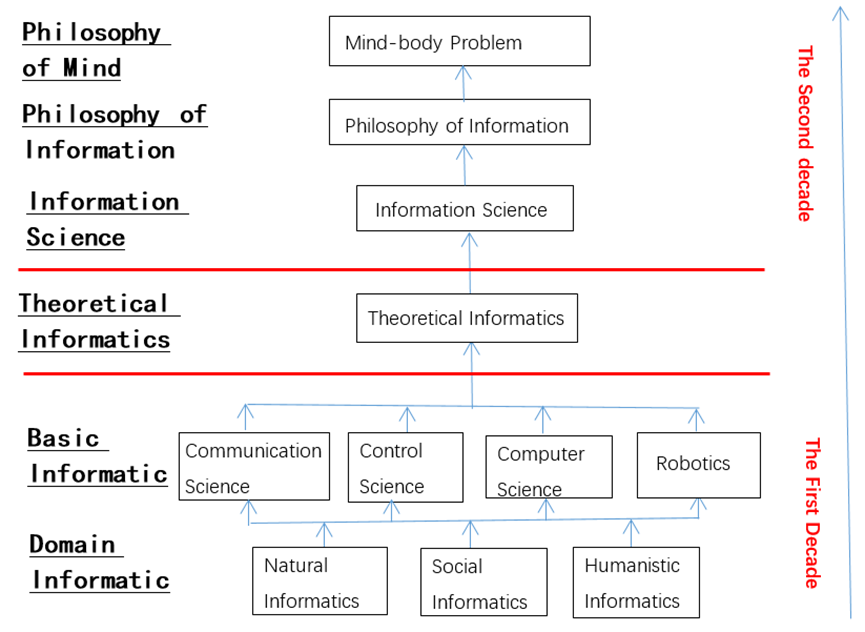
Figure 1 The main areas covered by Li Zongrong and his team's research achievements
Acknowledgement
We sincerely thank the founding Presidents of IS4SI, Ouyang Kang, W. Hofkishner, P. Marijuan, and the conference chairs of the 2023 Beijing Summit, Zhong Yixin and Shi Zhongzhi, for the opportunity to summarize and organize the above research results in such depth and detail. We also thank the organizers and all organizers of the conference. At the same time, we would like to thank all colleagues of the Academic Committee and the Academic Council of Huaguang Academy of Information Science at Wuhan, as well as friends who care about Huaguang Network and Huaguang Group.
Refernces
[1] Gary E. Kessler. Voices of Wisdom: A Multicultural Philosophy Reader, Ninth Edition. CENGAGE Learning: New York, US, 2020; pp.436-442.
[2] Wu Kun. Has Information Philosophy Brought a Fundamental Revolution to Philosophy? China Science Daily, February 13, 2019.
[3] Zhu Zhifang, Ouyang Qian, Zhang Xu. Conclusion: The Development Trend of Contemporary Western Philosophy. See: Writing Group. Comments on Contemporary Western philosophy. Beijing: Higher Education Press, 2020; pages 385-399.
[4] Xiao Feng. Informatism: From a social perspective to a worldview Beijing: China Social Science Press, 2010; Pages 9-13
[5] Wiener. Cybernetics ---- or the Science of Control and Communication in Animals and Machines. Translated by Hao Jiren. Science Press: Beijing, China, 1995; P. 133.
[6] Martin Morgan Stern, Robert. Zimmer. Philosophical History Ideas - A History of European Thought Spanning two Thousand Years. Translated by Tang Chen. Renmin University of China Press: Beijing, China, 2006; pp. 136-152.
[7] Li Dazhao. My Marxist View. See: Chen Duxiu. New Youth, "Marx Research", Volume 6, No. 5, May 1919.
[8] Compiling Group. History of Marxist philosophy. Higher Education Press & People's Publishing House: Beijing, China, 2012; p. 295.
[9] Xu Fenglin. The History, Current Situation, and Future of Russian Philosophy ---- Russian Philosopher Fronov Visits China to Discuss. Journal of Peking University (Philosophy and Social Sciences Edition), No. 2, 1993, p. 124.
[10] Institute of Philosophy, Academy of Sciences, Soviet Union. Principles of Marxist philosophy. Translated by the Compilation Office, Renmin University of China Press, edited by the Compilation Bureau of Works of Marx, Engels, Lenin, and Stalin of the Central Committee of the Communist Party of China. People's Publishing House : Beijing, China,1959; p.10.
[11] Robert Audi, etc. The Cambridge Dictionary of Philosophy. Cambridge University Press, First published 1995; Reprinted 1996 in the US; p.617.
[12] Xi Jinping. Philosophy and Social Sciences with Chinese Characteristics Should Reflect the "Six Qualities". Xinhua News Agency; May 19, 2016.
[REturn to the first page] [Return to our institute for achievement display]