
-


打开微信扫一扫

本院成果展示
Mathematical Theory of Communication and Information Science of Communication
Mathematical Theory of Communication and Information Science of Communication
Li Zongrong 1, 2, Chen Shaohua 1, 3, Zhang Jianwei 1, 4, Tian Aijing 1,2
1 Huaguang Academy of Information Science at Wuhan
2 College of Computer and Information Engineering, Hubei University
3 Institute of Electronic and Network Publishing, Huazhong University of Science and Technology
4 College of Foreign Languages, Huazhong University of Science and Technology
Abstract: In his paper "Mathematical Theory of Communication", Shannon quantitatively describes the physical law of the transmission process of "electric signal" on "channel" by using the mathematical methods of probability statistics and calculus, which fully conforms to the paradigm of natural science and is praised as a scientific model for "quantitative" research of information. However, we believe that the object of Shannon's "quantitative" research is not "information", but "message". Messages are the “carriers” of information, which can be quantified whether they are "signals" or "symbols". However, the information which is "content" or "meaning" of material carriers has no weight, and does not occupy space; it does not exist in Newton's time, therefore, we cannot make a physical space-time measurement for it. In this sense, Shannon's "theory of information" is actually "theory of message". Before Shannon's thesis, human beings took "language" as the carrier and successfully constructed the communication history of human society for thousands of years. However, from Wilbur Schramm, people began to study the concepts, principles and methods of communication in accordance with Shannon's paradigm of "mathematical-physical method". Although progress has been made in the past hundred years, it is difficult to make a fundamental breakthrough. The authors of this paper point out that the communication science does not belong to natural science, but an information science. We should use the space-time view and scientific paradigm of information science to re-observe and express communication science.
Key words: Science, Natural Science, Information Science, Space-Time View, Scientific Paradigm, Communication Science.
1. Introduction
In the field of science, the English word "communication" is often understood as "a giving or exchange of information, message, etc.", such as Shannon's paper "Mathematical Theory of Communication" translated as "Mathematical Theory of a transmitting". But sometimes, it can also be understood as "dissemination". For example, Wilbur Schramm's book How Communication Works is translated into Introduction to Disseminating Messages. In Wilbur Schram, the father of Communication studies, the Shannon information model "provides a new mathematical theory, which can be used to study electronic communication as well as human communication." [1] His logic of thinking should be: Shannon Information theory is a science, so it is a "scientific method" to quantitatively describe the objective law of communication process using the mathematical methods of probability statistics and Calculus. This scientific method should have universal applicability, and cannot be an exception in "Communication studies".
Since World War II, the mainstream of American Communication studies led by Schramm has adhered to the ideas of Empiricism, Positivism, and quantitative research, serving the existing political and commercial systems. However, after the war, the German Frankfurt School, the Culture of the United Kingdom research school, and the French Structuralism school were introduced into the United States in waves; These scholars raise the banner of ideological criticism and have a strong impact on the existing American system. The real liberation of Communication studies is the media environment school of North American Communication studies; It has effectively corrected the situation of the dominance of the empirical school and the decline of the critical school, and opened up a new world for Communication studies. After re-studying Shannon's theory and current Communication studies, the author believes that Shannon's discussion of "communication" is the transmission process of "electrical signals" on "channels", which belongs to the field of physics; He used the mathematical methods of probability statistics and Calculus to quantitatively describe the object, not "information", but "message". Shannon did not provide a precise definition of “information”, he believed that “information is a form of message’. Message, as the "carrier" of information, whether it is a "signal" or a "symbol", occurs in the "space-time" of physics and can be quantified. However, information is the "content" or "meaning" carried by messages, which occurs in the "time and space" of psychology and cultural studies. Therefore, it has no weight, does not occupy space, and can be "time agnostic" and cannot be measured. Obviously, Schramm believed that Shannon's mathematical theory of communication could be used to study both electronic communication and human communication. His starting point and basic ideas were one-sided and incorrect from the beginning.
We believe that the research object of Communication studies is not physics and biology, but psychology and culture. With language and message as carriers, human beings have successfully constructed the History of communication of human society for thousands of years. Obviously, Communication studies are not an "Information theory" (that is, dissemination theory) of "Newton's space-time view" in Shannon's sense. It is not a natural science, but an Information science in the sense of "psychology and cultural space-time view". According to Shannon's "Mathematical physics method" paradigm, people study the concept, principle, and method of "Communication studies". Although there has been progress in the past hundred years, it is difficult to make a fundamental breakthrough; Although this is unexpected, it is reasonable. We advocate that when the space-time concept and scientific paradigm of Information science is mature, people can re-observe and express Communication studies.
2. Before Shannon's "Communication Mathematics Theory", Human "Dissemination Practice" has already Developed
Human society is a collection of elements which are "people". The reason why humans form a “society” as a whole is due to the need for a “community of interests” among humans. In order to survive and develop, people must connect, communicate, and exchange material, energy, information, and intelligence. In the thousands and tens of thousands of years before the emergence of probability statistics and calculus that supported Shannon's mathematical theory, human communication and practical activities had already been carried out. As for the History of communication of human society, according to different communication technologies and modes, it can be roughly divided into oral communication, written communication, print communication, electronic communication, network communication, and other different stages.
Oral communication is the first stage of human communication activities. It started from people’s primitive society to the appearance of characters. Language is generated through labor and social collaboration, and has gone through a long process of development. There is a viewpoint in the study of phonological history that oral language was first named after things around it using different sounds, which also facilitates the exchange and transmission of information between people. 【2】 However, in the absence of recording technology, oral communication has inherent drawbacks, which can only be used in close proximity in space and fleeting in time, making it unsuitable for preservation. If human communication only stays at the level of spoken language, then it is difficult for it to become the “spirit of all things”.
The second stage of human communication activities is the dissemination of words. If there is also "oral transmission" among animals, but there is absolutely no "written transmission" among them. It is precisely through the formation and expansion of information systems centered around written symbols that the spiritual wealth of individual human beings can be accumulated, passed down from generation to generation, and form a constantly developing social culture. The communication behavior of animals without words is very similar to that of "no memory channel" in Telecommunications engineering. Every individual animal dies, leaving nothing behind. In socialized and institutionalized education, human individuals can directly reach the peak of social and cultural accumulation. Social culture cultivates and shapes an individual's psychology, which are enriching and developing social culture in turn. It is the dissemination of words that enables the central government to organize a large population, thereby achieving large-scale social management and control. 【 3 】
The invention of printing technology and the realization of printing dissemination marked that humans have mastered the replication technology of textual information, giving birth to the concept of mass production of information. The emergence of the printing press ushered in the birth of modern newspapers and magazines, and with the popularization of reading and writing abilities, printing media began to play an increasingly important role in social change and social life. From a global perspective, the printing age is synchronized with the birth of modern civilization.
Compared to the mass reproduction and production of textual information achieved through printing dissemination, the most important contribution of electronic dissemination is the rapid and long-distance dissemination of information. In 1844, Maurs rewrote Henry's theory and technology on telegraphy, abolished 26 letter symbols, and invented the "Maurs code" composed of dot and horizontal symbols. In 1846, the first telegraph line presided over by Maurs was opened, and the telegraph entered the practical stage from the experimental stage. In 1847, Britain and France laid Submarine communications cable. Previously, all “communication” was transmitted through postal service, where communication equals mailing, and the speed of message dissemination equals the speed of messenger mounts. At that time, the English term "communication" referred to both dissemination and transportation. The emergence of telegrams not only declared the separation of communication and postal services, but also heralded the arrival of the era of "instant communication". In 1876, Bell erected the first telephone. In 1894, Marconi, an outstanding radio communication engineer, surpassed wire telegraph and telephone. His homeland is Italy, but the Italian government refuses to support his invention; Marconi had no choice but to go to England and seek funding from the British government. With the strong support and assistance of the British government, Marconi quickly obtained invention patents and public recognition, surpassing the Russian physicist Popov who invented radio communication earlier than him. [4]
Although the development of electronic media for human communication has achieved breakthroughs in spatial distance and speed, it has also achieved the reproduction and transmission of sound, image, and motion information. However, the use of computerized and intelligent network communication as a means provides more complete technical conditions for the development of communication, while also posing new requirements for the process of social informatization. With the widespread application and popularization of the Internet, the form and function of websites are increasingly expanding, and new communication media such as blogs, online communities, interactive communication, and intelligent media are emerging one after another. The number of social members who use new media to participate in communication activities is developing rapidly. Social informatization has expanded the understanding of communication, especially enhancing the understanding of communication from the perspective of information vision, and also increasing people's awareness of using communication media.
3. Shannon's Mathematical Theory of Communication and its "Normative" Misleading on the Establishment and Development of Communication Studies
In 1948, Shannon published the Mathematical Theory of Communication to quantify and formulate the physical model of electrical communication (wired and wireless) and establish Shannon's "Information theory". As shown in Figure 1, messages sent by the source are transmitted to the sink through interference channels, forming the simplest communication system model.
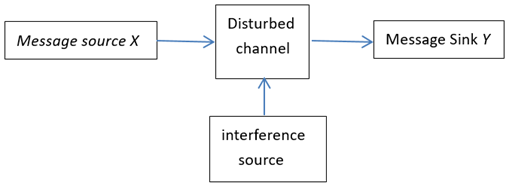
Figure 1 Logical Model of a Simple Communication System
In Figure 1, X and Y represent two random events. X is taken from the set of discrete messages sent by the source, and Y is taken from the set of discrete messages received by the sink. Due to the fact that the host does not know in advance which message the source is sending at a certain time, each message is a possible result of a random event.
The above X can be regarded as a discrete random variable. Assuming it takes values from the set , where n can be a finite positive integer or a countable infinite integer, that is,
  . The probability of each element in the set is specified as
 , that is,
  represents the probability of a random event X in parentheses occurring as a result of
  . In this way, the mathematical model of source X is

The mathematical model of Sink Y is
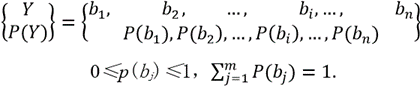
If the channel is ideal, when the source sends a message ai, the sink must be able to receive the message accurately and completely eliminate the uncertainty of ai, and the amount of information obtained is the uncertainty I(ai) of ai, which is all the information contained in ai itself.
Generally speaking, there is always noise and interference in the channel. After the message ai sent by the source passes through the channel, the sink may only receive a certain variant bj caused by interference. After receiving bj, the destination speculates the probability of the source sending ai, which can be described by the Posterior probability p (ai/bj). Accordingly, the probability p (ai) of the source sending the message ai is called the Prior probability. We define the logarithm of the ratio of the Posterior probability to the Prior probability of ai as the Mutual information quantity of bj to ai, also known as the Mutual information quantity (hereinafter referred to as mutual information), expressed by I (ai; bj), that is

As mentioned earlier, due to the fact that the channels in physics conform to the Newtonian space-time view, the process of electrical signal propagation can certainly be represented through quantitative and formulaic means. However, for the Mass communication that implements the non-Newtonian concept of time and space, the mathematical method of Shannon's communication is completely cut to fit. It is a historical coincidence that Wilbur Schramm, Dean of the School of Journalism at the University of Iowa, came to the University of Illinois in 1947 to serve as assistant president and president of the University of Illinois Press. After that, he did two things of great significance to Communication studies. The first is to publish Shannon's Mathematical Theory of Communication, the foundation work of Information theory. The publication of this book not only marks the birth of Information theory, but also has a significant impact on communication research. Shannon's articles are highly professional. In order to enable more people to grasp the Information theory, Schramm specially invited the mathematician Weaver to annotate Shannon's views to make them easy to understand. Schramm gets great inspiration from Information theory. His information dissemination model is to completely copy Shannon's message dissemination model. The second thing is to establish the Communication Research Institute at the University of Illinois. This is the first of several famous communication research institutes he founded in his life, and its establishment provided a solid foundation for communication research for the first time. From then on, communication research had its own headquarters and home, instead of being like a wandering abandoned child who often relied on others, and communication research began to move towards standardization. In this way, the establishment and development of Schramm's Empiricism Communication studies was normatively and systematically misled by Shannon's mathematical theory of communication from the very beginning. Here, we challenge the successors of contemporary Schramm Empiricism School, namely all scholars who agree that the mathematical theory of Shannon Communication "can be used to study both electronic communication and human communication": please follow the formula of "Information theory" to give a practical example to describe the communication phenomena!
4. The Process from "Information Theory" and "Generalized Information Theory" to "Information Science"
At present, the seriousness of the problems in the mainstream development of Communication studies is not only misled by the "Information theory". The misleading effect of the old Information theory has not been eliminated, and Information theory has changed, put on the gorgeous cloak of "Information science", and used people's ignorance of Information science to lead Communication studies further and further on the wrong road with more "brilliance".
Generally speaking, the information process mainly includes communication, control, and computation. Robotics theory and technology are applications of communication, control, and computation. Among them, control is the purpose, computation is the design and planning of control objectives and strategies, and communication is the transfer of information “physical positions” during the calculation and control process. In the World War II, the military supported "computing equipment for shell trajectory" and "automatic control device for air defense artillery" were in an absolute state of confidentiality, while telegraph, telephone and wireless communication were closely related to social members. Therefore, Shannon defined communication as "information transmission", idealized the communication process into five parts: "source, transmitter, channel, receiving set, receiver", and put forward the "channel theorem" (Channel capacity is the maximum speed at which the channel transmits information almost without error), which was immediately followed by scholars and welcomed by the society.
Since the transfer of physical location of information is almost everywhere, Information theory has been directly applied in electrical fields such as communication, broadcasting, television, radar, navigation, computer, automatic control, electronic countermeasure, etc., and has also penetrated into natural sciences such as medicine, biology, psychology, neurophysiology, and even into the fields of linguistics and aesthetics. In the 1960s, some sociologists put forward the concepts of Post-industrial society and information society, and Information theory began to penetrate into the fields of economics and social science. As a result, Information theory has rapidly developed into a "generalized Information theory" covering an extremely wide range. In 1993, Lu Chenguang's Generalized Information Theory was published. 【6】 However, Zhong Yixin had said in the "Postscript" of the Principles of Information Science that "at that time we called it generalized Information theory, also called Information Science" (1986). 【7】 Information Theory and Coding, edited by Chen Yun in 2012, said on page 6 that "Information theory has rapidly developed into a broad Information theory ----that is Information Science". 【8】 Obviously, both "also called Information Science" and "that is Information Science" express a common "meaning": "Generalized Information Theory = Information Science". Therefore, in Zhong Yixin's conceptual system, since he began to study Information Science, there has been a potential thinking pattern: the principle of generalized Information Theory is also called the Principle of Information Science.
The human knowledge system can be roughly divided into three fields: religion, philosophy, and science. Among them, what can be called "theory" is not necessarily "science"; Whatever can be called "science" is inevitably "theory". Scholars advocate that research on information can not only generate theory, but also science, and this spirit and mindset are not wrong. The question is, after the "generalized Information theory" is renamed as "Information Science" (also called "Information science" for the sake of narrative convenience), will it be "Information Science", and is Information science be the generalized Information theory? In the phenomena of "renaming" schools, we have seen that "XXXX School" is replaced by "XXXX College" and then "XXXX University"; After that, will its educational quality and level necessarily be fundamentally and truly improved just because of the "renaming"?
Professor Zhong Yixin advocates that different academic viewpoints and schools should "respect each other" and everyone should "be harmonious but different". Many scholars also advocate that frank exchange and mutual debate of different opinions among scholars is an important way to achieve "win-win" and "multi-win" cooperation. We believe that scholars, taking advantage of their existing academic status, use methods such as "administrative means" and "collaborate and form a gang" to repel dissent and refuse development, but ultimately it is difficult to achieve their desired results. In fact, almost all sober scholars know that "Information Theory", "Generalized Information Theory" and "also known as Information Science" have no fundamental difference in scientific level, only that scholars have "assigned" different values to their "scientific aura" brightness. Since they follow the same paradigm of physical science (natural science), take material (current, voltage, light, laser) as the research object, adopt the method of mathematical physics, quantify the research object, and use formula to express the regularity of material movement and change, the differences between them are as difficult to be noticed by outsiders as twins.
Originally, the research object of Communication Studies is the means for human society to achieve "self-organization" and survival and development goals, that is, to achieve "social information exchange, inheritance, communication, competition and development". It is not only a "communication of messages", but also involves complex processes such as understanding, interpreting, arguing, summarizing, organizing, and innovating messages, and may even contain the "intentional" behavior of the "source" to mislead the "host" (no aversion to deception). These are not only related to the "meaning" of the message (i.e. "pure information"), but also to the interests and values of the participants in the dissemination process. Therefore, "Information Theory", "Generalized Information Theory" and "also called Information Science" are not only useless but also completely misleading to the research of Communication Studies.
So, what is the real Information Science about information phenomena? We believe that firstly, its "information definition" reveals the essential characteristics of the content and meaning of the carrier, such as "information is the meaning of signals and symbols", rather than "self-expression of the state of motion and changes of things" (Zhong Yixin, P50). Secondly, it asserts that phenomena unique to information, such as non-conservation of information, are non-physical and cannot be explained by conserved material concepts and energy laws. Thirdly, it advocates the four element theory of the universe (material, material energy; information, information energy), providing the conceptual and theoretical basis for artificial intelligence. Fourthly, it advocates the "material-information duality" of all things in the universe, demonstrating the duality of existence, motion, and change of things. Fifthly, it advocates that the method of Information Science is logic and procedure rather than quantity and formula. It believes that the "road map" and "timetable" in the humanistic Social phenomena are just examples of implementing the method of Information Science. Sixth, it advocates that the structure of the knowledge system of Information Science is a "1+4+3" model, that is, one "theoretical informatics" + four "basic informatics" (communication, control, computing, robotics) + three "domain informatics" (natural informatics, social informatics, and humanistic informatics). Seventh, regarding the relationship between Information Science (including all Humanities and social sciences) and Natural Science, it advocates that natural science studies the material characteristics of nature, and information science studies the information characteristics of cultural circles and nature. In the original sense, the expression of the knowledge system of "Information Science" should be a set of "series books". It is feasible to issue a separate book of "Concepts, Principles, and Methods of Information Science", but Zhong Yixin's "Principles of Information Science" is actually an "expanded version" of "Generalized Information Theory".
5. Re Observe the Phenomena of "Communication" according to the "Space-Time View" of Information Science
If we say that the function of communication is to build and change the social information environment, we can understand Communication studies from the perspective of building and changing the social material environment; In this sense, Communication studies is a social informatics. The object of Shannon's mathematical theory on communication is the physical phenomena of "electrical signal" transmission, which is a natural scientific knowledge system about the characteristics of "material" in nature. It implements Newton's view of time and space. Obviously, after the development of the knowledge system of Information Science, we have reason to use the time-space view of Information Science to re-observe the "communication phenomena" in order to re describe "Communication Studies".
Natural science tends to approach time and space in an empirical and practical way of thinking. “Space” is a geometric concept. Everything in the universe has weight, volume, and its length, width, and height. Time can be expressed through space. People view time as a quantifiable reference frame like space. Given an "origin" and coordinate system, one can quantify the accurate position of an object in space and describe its motion patterns. The displacement of celestial bodies on planets such as the sun and moon, as well as the mechanical rotation of clocks, time is reflected in this cyclic position change. It is used to calculate the speed of object movement and to calculate the workload of workers.
Usually, when people want to recognize something, they must do so in the form of time and space. Without time and space, there can be no human cognitive activity. People need a framework of time and space to form understanding, which is a purely intuitive form of human inner ability. Can we think about it, is it possible to perceive something that does not have spatial location or temporal nodes? Aristotle advocated that time is the quantity and number in successive movements; Things that move in time can inevitably be arranged in space and become objects for classification and examination. In this way, time and quantified space appear simultaneously, becoming a quantifiable form of time. The task of all natural sciences is to examine things using a quantitative perspective on time and space, and to describe the laws of motion of things using functions of time and space. Shannon's work is a good example of carrying out research on "Telecommunications Engineering" under the guidance of "Newton's concept of time and space".
However, the research object of Communication studies is quite different from that of "Telecommunications engineering". Guo Chenguang said, "Communication studies takes the social information system and its operation rules as its research object, and also defines such a task for itself: it must explore and find scientific methods to overcome communication obstacles and barriers, and find a mechanism for the benign operation of the social information system, so as to promote the sound development of society through the investigation of the structure, function, process and interaction relationship of the system and its various parts." The social information system is an open, self-organizing, self-regulating, self-creating, and self-improving system, which includes different levels of social culture and psychology, including economic, political, military, and other fields. They are obviously not Physical System.
For things in the physical world, such as freely falling objects, they exist in Newtonian time-space. For each given time t, the distance at which the object falls can be calculated using the formula H= . After an experiment is done, do it again, and the results are exactly the same; So, natural science claims that it can be empirical, repeatable, and predictable. However, the concept of psychological time-space is completely different. Firstly, the psychological process is an information process, not a material process. The "carrier" of psychology, the nervous system has biological characteristics, including volume and weight, but psychological information itself does not exist in space, without volume and weight. Secondly, psychological processes do not exist in Newtonian time. For example, adults remember childhood “interesting things” and “talk about them with relish”, as if they were happening in front of them. We look forward to future success as if it is already there, within reach. Our “body” lives in the current material environment, but our “soul” lives in future dreams. A student has taken the course of "Communication Studies" twice. The process cannot be repeated and it is difficult to "foresee". He failed his first exam. However, on his second exam, he could get full marks. As for the concept of cultural time-space, it is not only different from Newton's view of time and space, but also almost opposite. Broad culture encompasses all human "creations", while narrow culture can only refer to human spiritual culture. Physicists use Newton's view of space-time to study phenomena, but as scientific knowledge itself, physics does not possess the characteristics of Newtonian space such as weight and volume; Moreover, in discussions such as the introduction of knowledge structure, the description of logical connections, and the analysis of the length of schools in College Physics, it can be “time independent”. In other words, they do not exist in Newtonian time, so there is no need to consider the time factor.
Obviously, the phenomena of communication is not related to the space-time view of Newtonian physics, but to the space-time view of psychology and the space-time view of cultural studies. If Communication studies wants to study the social information system and its operation rules, it is impossible for it to pray for the formula expression of H=. In the first chapter of Cybernetics, Wiener pointed out that its theory should belong to the scope of Gibbs Statistical Mechanics rather than classical Newtonian mechanics to make statistically satisfactory actions for a class of statistically expected inputs. Therefore, modern automata, like living organisms, exist in Bergson's time. According to Bergson's viewpoint, there is no reason to believe that the basic way of life activity must be different from artificial automata that simulate living organisms. In this way, Wiener referred to time in the psychological sense as "Bergson time". We merge psychological time with cultural time and call it “informatics time”. Generally speaking, the space-time view of Information Science is a big concept, including the space-time view in the sense of physics and biology, but also the space-time view in the sense of psychology and culture. 【9】 (The "space-time view" of Information science is an important supplement to the "scientific view", "world view", and "outlook on life" of Information Science. See Tian Aijing, Legendary Scholar Li Zongrong: Original Innovation Achieves a Dream of Transcendence). We advocate that it is urgent to re-observe the phenomena of human communication with the time-space concept of Information Science.
6. Redefining "Communication Studies" according to the "Science Paradigm" of Information Science
What we say is the paradigm of Information Science, that is, the three "paradigm triangles" of Information Science and their interactions: (1) computing triangles (controller, memory, calculator); (2) Psychological triangle (motivation, knowledge, wisdom); (3) Cultural triangle (survival concept, natural concept, social concept). They respectively reflect the essential characteristics and basic laws of information phenomena in nature, psychology, and cultural studies. In the sense of Topology, these three triangles are equivalent. In the sense of generative theory, they are interconnected.
In order to better observe, understand, and express the operation and laws of social information systems, based on the quaternism concept of theoretical informatics, we propose the "intelligent agent hypothesis" about social information dissemination: the subject engaged in information dissemination is not only information, but must be intelligent. Intelligent communication agents can be machines, humans, organizations, or society. For their own survival and development, in order to achieve their roadmap and timetable, they must design, implement, and adjust their communication behaviors: whether to spread, what to spread, and how to spread? The "intelligence" of the communication subject can be machine intelligence, personal intelligence, collective intelligence, cultural intelligence, or their combination, such as human-computer combination. They are all "information processing systems", and "dissemination" is only one way for the system to work. In this way, the phenomena of "dissemination" returns to its original state, centers around "intelligent agents"; Communication is only one type of information behavior of intelligent agents, not the only one. Therefore, communication is naturally linked to the values, knowledge structure, and intelligence level of the communication subject. Dissemination energy is "information energy", while communication energy is "material energy", which cannot be compared. Obviously, the communication mode is no longer Shannon's logical model and mathematical model of "communication", no longer the content of electricity and physics, and no longer requires Mathematical physics methods.
As a species, humans have two fundamental characteristics: biological and social. As a biological individual, humans possess the nature of life, which is due to a factor in life information that cannot be explained by natural science; This irreducible nature of life is manifested in a stable state of metabolism, growth, development, reproduction, self-regulation, autonomous activities, and the "wholeness" exhibited by human individuals. This kind of holism contains two main characteristics, the manifestation of holism and the realization of holism: (1) expressing holism through the phrase “the whole is greater than the sum of parts”. The human individual system exhibits certain characteristics that are not possessed by its components, and these characteristics cannot be obtained by analyzing its components. (2) Realize integrity through self-organization, including self-organization, self-preservation, self-healing, self-replication, self-renewal, self-development, self-improvement, self-creation, and so on. In the process of opening up to the environment, human individuals exchange material, energy, information, and intelligence with the outside world to maintain their integrity. After about 7 years, all the cells in our body have been replaced, but I am still myself. What enable me to maintain my identity is not my cells, but my biological genes (DNA), the things that make up the integrity of my body, and my ability to self-organize.
Similarly, humans also exhibit their 'wholeness' in terms of' sociality '. In about 100 years, a country will have its people all replaced, but the country remains the same; What plays the same role here is the integrity of the national system. Human individuals age and are born generation after generation, and what remains unchanged are the genes of social culture (MEME), the things that make up the entirety of the country, and the ability to "self-organize", including self-preservation, self-repair, self-replication, self-renewal, self-development, and self-improvement. Chinese culture has been passed down for thousands of years, and the medium for achieving this overall stability and high self-organization ability is nothing but social information and its "dissemination". Therefore, the communication phenomena itself is not a concept of electricity and physics limited to "Telecommunications engineering", but a concept in the sense of culture, sociology, politics, linguistics and Journalism. The method in the communication phenomenon is not Shannon's and Zhong Yixin's "Mathematical physics method", but the logical and procedural method of Information science.
So, how does human society "demonstrate" its wholeness and "realize" its own wholeness? It relies on the "Mass communication" in the "social information system", that is, Communication studies. For ease of expression and discussion, we assume that {father, mother, and child} form a {family}, N {families} form a {community}, M {communities} form a country, and L countries form the {United Nations}. Obviously, in the largest United Nations triangle, there are L country triangles, M community triangles in one country triangle, N family triangles in one community triangle, and 3 individual triangles in one family triangle. Every subject of communication, "individual", "family", "community", "country", and "United Nations", has "intelligence", that is, it has its own values, knowledge structure, and intelligent system; They each worked hard to achieve their goals according to their own roadmap and timetable. All entities have their own strategies and strategies, seek their own partners, establish their own community of interests, defeat their competitors, and achieve the "maximization" of their own interests. At this time, the "communication" between different subjects takes different forms, contains different content, occurs at different levels, scopes, times, and places. Therefore, from a new perspective, we can restate the two person communication system, group communication system, organizational communication system, and Mass communication system, and discuss the gatekeeper theory, usage and satisfaction theory, agenda setting theory, training theory, Spiral of silence theory, knowledge gap theory, and so on.
7. Conclusion
In fact, Shannon himself never boasted that he had proposed a general theory about information; He is well aware of the mathematical theories related to message measurement, encoding, and channels. If applied to humanities and social sciences, he may encounter problems and explicitly demands the attention of scholars. However, in the absence of any "alternative social public goods" that can be used, Shannon's "reminder" has almost no effect. But now, people have realized the transcendence of "Information theory", "generalized Information theory" and "also Information science" (referred to as "Information theory family" for short), a real "Information science" that studies "information" (not news) has developed and matured, and the space-time view, scientific view, world view, and outlook on life of Information science have also been established. We have conditions and reasons to draw a clear line between "Information science" and "Information theory family", make Shannon's words more clear, and lead the humanities and social sciences into the right track of "discipline informatization" as soon as possible.
The purpose of this article is to identify and raise issues, and provide general ideas and suggestions for solving them. We have seen that the "science paradigm" of Information science proposed by theoretical informatics has been successfully applied to psychology, law, ethics, and other fields. We hope that Communication studies and linguistics can bear the same rich fruits. Thank the colleagues of Huaguang Academy of Information Science at Wuhan for actively participating in the discussion on this article.
8. References
【1】 W. Schramm, W. Porter. Introduction to Communication Studies (Second Edition). Translated by He Daokuan. Beijing: China Renmin University Press, June 2018, page 226.
【2】 Chen Shaohua. Communication Informatics. See Li Zongrong, "Introduction to Theoretical Informatics" manuscript: "5.2 Communication Informatics", 2008-08-16
【3】 Guo Chenguang. Communication Studies Course (Second Edition). Beijing: China Renmin University Press, March 2019, pages 9-10.
【4】 Wu Guosheng. The Course of Science (Second Edition). Beijing: Peking University Press, 2002
【5】 Fu Zuyun. Information theory - Basic Theory and Application (Fourth Edition). Beijing: Electronic Industry Press, October 2018.
【6】 Lu Chenguang. Generalized Information Theory. Beijing: China University of Science and Technology Press, Taiwan Rulin Press, 1993
【7】 Zhong Yixin. Principles of Information Science (Third Edition). Beijing: Beijing University of Posts and Telecommunications Press, 2002.
【8】 Chen Yun. Information Theory and Coding (Second Edition). Beijing: Electronic Industry Press, 2012.
【9】 Tian Aijing. Legendary Scholar Li Zongrong: The Dream of Transcending Original Innovation Achievements. Figures of the Times, Issue 172, January 28, 2019.
[Return to the first page] [Return to our institute for achievement display]